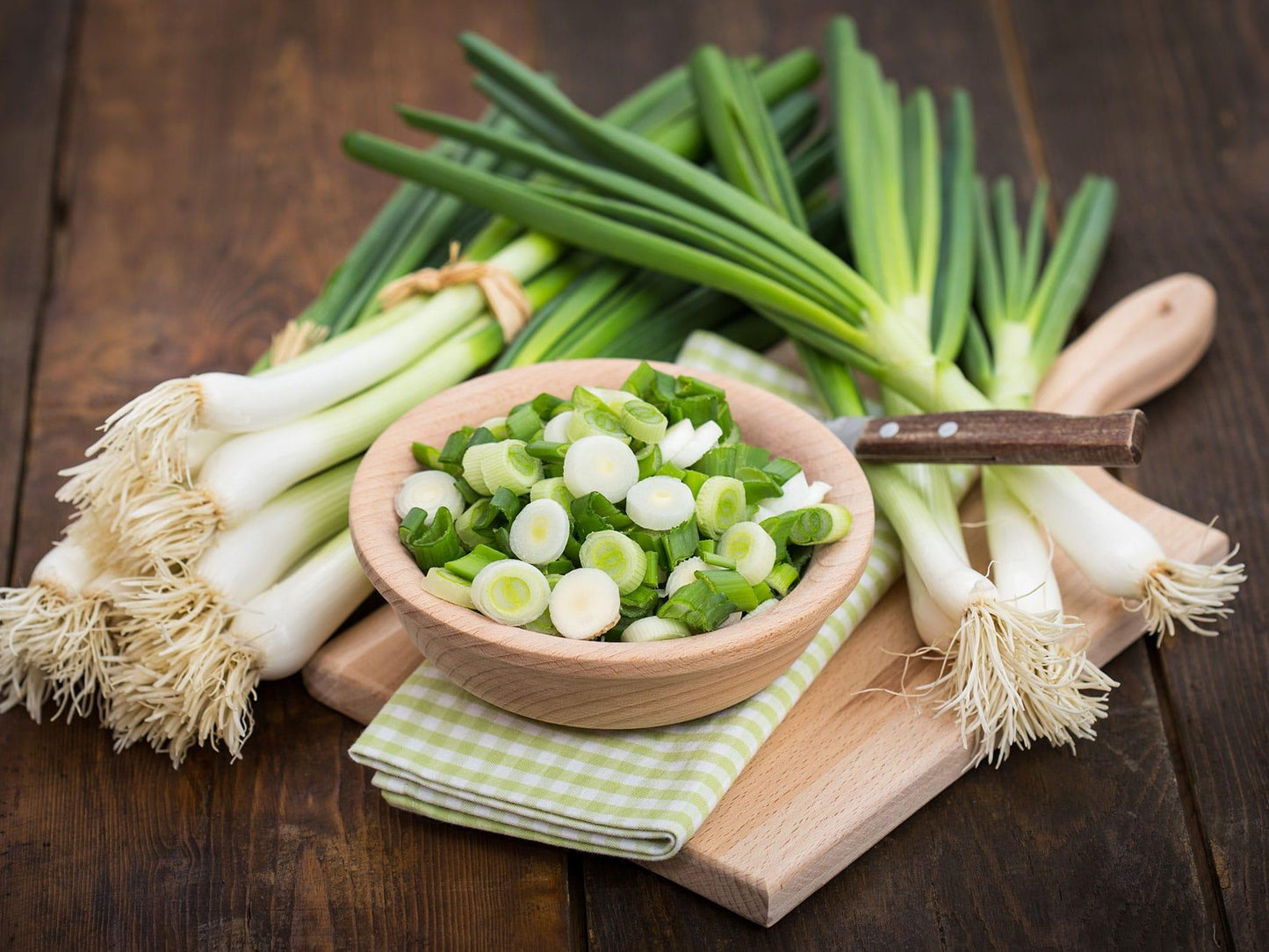
Bunching Onion provides tender green leaves and crisp white stems with a fresh, mild onion flavour. Chop both parts into salads, omelettes, parathas, soups, rice, noodles, sauces and vegetable dishes, or use them as a fresh garnish.
Bunching Onion comes from China and is now grown widely around the world. Unlike bulb onions, it remains slender at the base instead of forming a large round bulb. Established plants may divide into fuller clumps and provide repeated picking.
Why Grow It
-
Mild Flavour: Fresher and less sharp than mature bulb onions.
-
Fully Edible: Both the green leaves and white stems can be used.
-
Repeated Picking: Cut leaves can grow again several times.
-
Quick Growing: Leaves can be picked once plants are around 6 inches tall.
-
Pot Friendly: Grows well in containers and small garden spaces.
Best Conditions
-
Germination: Usually 7–14 days
-
Temperature: Around 15–25°C
-
Sunlight: At least 6 hours
-
Pot size: At least 8–10 inches deep
-
Spacing: About 1–2 inches between plants
-
Plant height: Usually around 12–24 inches
-
Soil: Moist, fertile and well-draining mix
Sowing note: In Lahore, Faisalabad, Islamabad and Rawalpindi, sow from September to November, or again from January to February. In hotter areas such as Karachi and southern Punjab, sow from October to February while the weather remains mild. In colder northern and hilly areas, sow from March to April, after the risk of hard frost has passed.
How to Sow
- Fill a tray or final container with fine, moist seed starter mix.
- Make shallow rows around ¼–½ inch deep.
- Sow the seeds thinly and cover them lightly with the mix.
- Water gently and keep the surface consistently moist.
- Thin the seedlings to 1–2 inches apart after they become established.
- Transplant tray-grown seedlings when they are around 4–6 inches tall.
- Sow another small batch every 2–3 weeks for continued picking.
Plant Care
Keep the soil evenly moist because bunching onions have shallow roots. Allow excess water to drain freely and remove weeds before they compete with the young plants. During hot weather, water before the leaves begin to bend or lose firmness.
Mix a small amount of Vermicompost into the potting mix before sowing. For plants being picked repeatedly, add another small amount after 4–6 weeks.
Check between the central leaves for onion thrips, which can leave silvery marks and dry tips. If they appear, spray Neem Oil carefully between and underneath the affected leaves.
Local Gardener Tips
- Keep the upper soil moist until the slow-growing seedlings appear.
- Sow small batches instead of planting the entire packet at once.
- Provide afternoon shade when temperatures become extremely hot.
- Shelter containers from prolonged monsoon rain.
- Use removed seedlings as tender baby green onions after thinning.
Harvesting
Begin picking when the leaves are at least 6 inches tall. Cut selected leaves around 1–2 inches above the base and allow the plant to grow again. Pull the entire plant when you want both the green leaves and the longer white stem.
Rinse well before use. Freshly picked bunching onions can be stored in a bag or covered container in the refrigerator for about one week.
FAQs
How can I get longer white stems?
When the plants are 4–6 inches tall, add 1–2 inches of loose soil around the white bottom part. Repeat as they grow taller. The part covered with soil will remain white and become longer. Do not cover the green leaves.
Why has a flower stalk appeared?
Mature plants or plants exposed to temperature stress may produce a firm flower stalk. Remove it early if you want softer leaves, as the stalk becomes tough as it develops.
Will Bunching Onion survive winter?
Established plants tolerate cool weather and light frost. In colder northern and hilly areas, protect containers from hard frost and avoid leaving the roots in waterlogged soil.
Common names: Bunching Onion, Welsh Onion, Japanese Bunching Onion, Scallion, Green Onion, Spring Onion, Hara Pyaz, ہرا پیاز