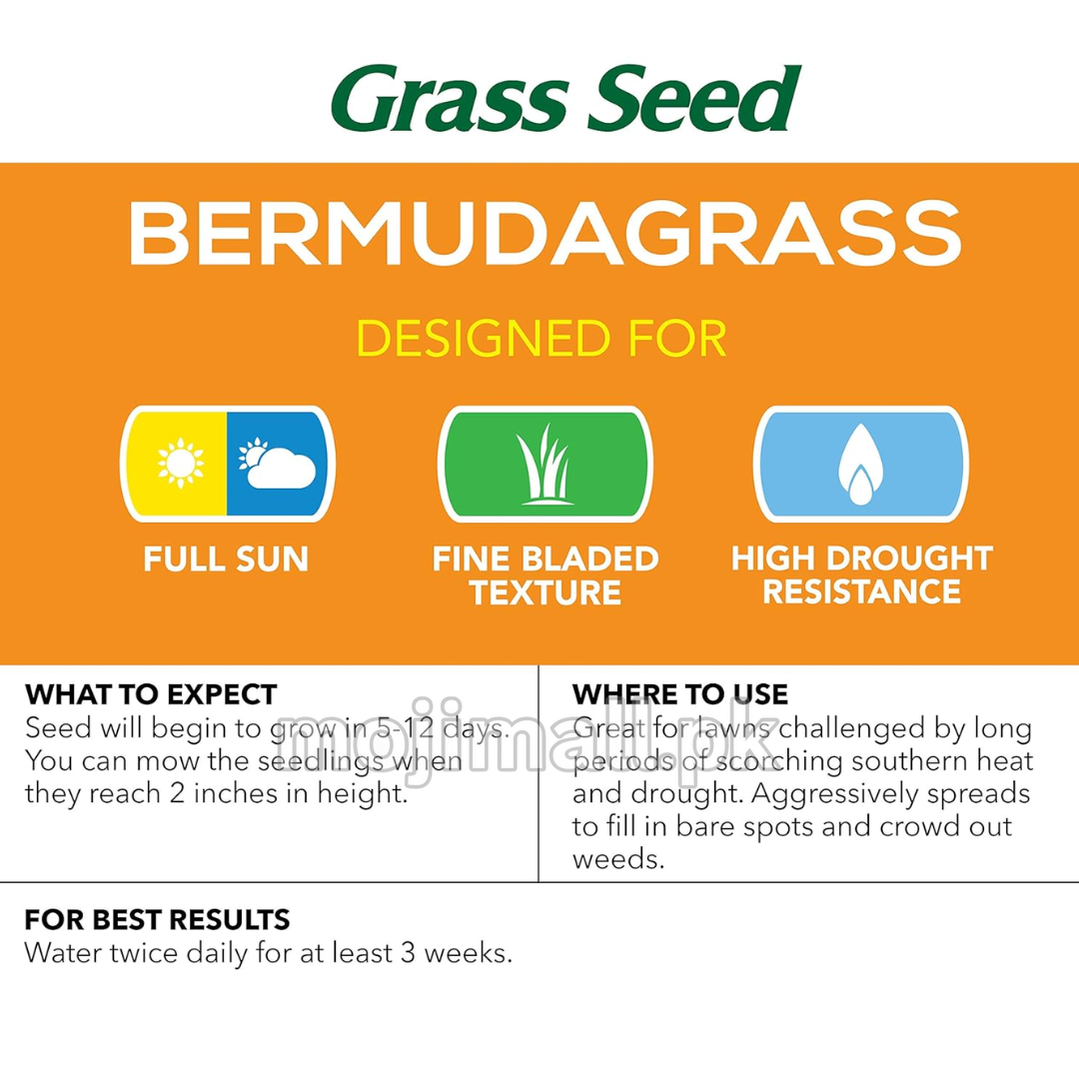
Bermuda Grass forms a dense green lawn for sunny home gardens, courtyards and outdoor play areas. It handles summer heat well and tolerates regular foot traffic once established.
Its creeping runners spread across the ground and root as they grow, helping the lawn thicken and recover from wear. Warm weather encourages strong growth, while regular mowing keeps the grass neat and encourages a fuller lawn.
Why Gardeners Love It
-
Heat Tolerant: Grows strongly during warm and hot weather.
-
Durable Lawn: Established grass tolerates walking and everyday garden use.
-
Spreading Growth: Runners help fill small gaps and worn areas.
-
Drought Tolerant: Established roots handle short dry periods.
-
Flexible Pack Sizes: Suitable for small patches or larger lawn areas.
Best Conditions
-
Germination: Usually 7–21 days; slower in cool conditions
-
Soil temperature: At least 18–20°C and consistently warming
-
Sunlight: At least 6–8 hours of direct sunlight
-
Sowing rate: About 100g per 108 square feet, equivalent to 10 square metres
-
Mowing height: Around 1–2 inches for a home lawn
-
Soil: Well-draining soil with a level, firm surface
Sowing note: As a warm-soil guide, sow from March to June in Lahore and Faisalabad, and from April to June in Islamabad and Rawalpindi. In Karachi and southern Punjab, sow from March to June. In colder northern and hilly areas, sow from May to June once frost has passed and the ground has warmed.
Seed Coverage Guide
| Pack size |
Approximate lawn area |
| 50g |
54 square feet / 5 square metres |
| 100g |
108 square feet / 10 square metres |
| 500g |
538 square feet / 50 square metres |
These estimates use the sowing rate above. Actual coverage depends on seed distribution, soil preparation and growing conditions.
How to Sow
- Remove weeds and stones, then loosen the upper 2–3 inches of soil.
- Rake the ground level and firm it lightly to create a smooth seedbed.
- Divide the seed in half, spreading one portion lengthways and the other crossways.
- Rake lightly so the seeds sit within the top ⅛ inch of soil.
- Press with a light roller or flat board, then water with a fine spray.
- Keep the surface moist with light watering until seedlings root and begin spreading.
Plant Care
As seedlings develop stronger roots, gradually replace frequent light sprays with deeper, less frequent watering. Established grass needs watering when rainfall is insufficient, especially during prolonged heat. Avoid leaving the ground constantly soggy.
Mix a light application of sifted Vermicompost into poor soil before sowing. Feed established grass during active growth using a suitable lawn fertilizer at its labelled rate. Spread fertilizer evenly and avoid feeding dormant grass during cold weather.
Local Gardener Tips
- Sow on a calm day so the small seeds do not blow away.
- Avoid sowing immediately before heavy monsoon rain.
- Keep people and pets off the area while seedlings establish.
- Trim lawn edges regularly to stop runners entering flower beds.
- Mist newly sown seed 2–3 times daily in warm, dry weather to keep the surface moist.
-
Water established lawns deeply once or twice weekly, adjusting for heat and rainfall.
Mowing and Lawn Use
Begin mowing when the grass is well rooted and around 2½–3 inches tall. Use sharp blades and remove no more than one-third of the leaf length at each cut.
Mow regularly during active growth instead of allowing the lawn to become tall and cutting it severely. Leave fine clippings on the lawn when they are evenly scattered, but remove thick clumps.
FAQs
Will Bermuda Grass stay green through winter?
It can turn brown and become dormant during cold weather. This does not necessarily mean the lawn has died. Healthy established grass usually greens up again when the soil warms in spring.
Can I use weedkiller while establishing the lawn?
Some weedkillers prevent grass seed from germinating or damage young seedlings. Check that the product is suitable for newly seeded Bermuda Grass and follow its waiting period before sowing or treating the lawn.
Will these seeds match my existing lawn exactly?
Grass varieties can differ in colour and leaf texture. If your lawn is a particular named variety, matching turf or plugs provide a more reliable visual match than adding an unidentified seed variety.
Common names: Bermuda Grass, Bermudagrass, Cynodon dactylon, Couch Grass, برمودا گھاس