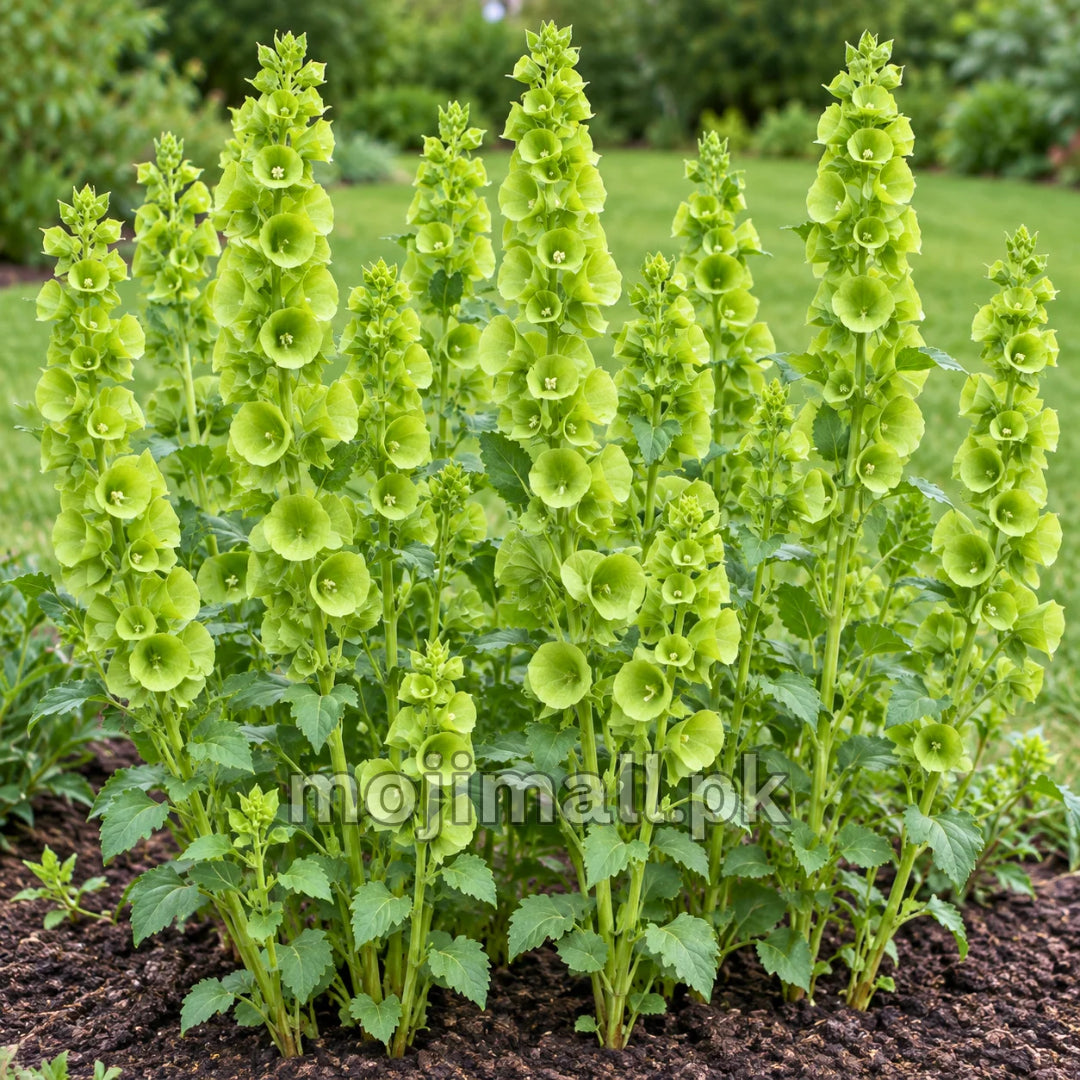
Bells of Ireland produces tall spikes covered with pale green, bell-shaped cups. Their fresh green colour stands out beside brighter winter flowers, while the long upright stems add height to pots, flower beds and floral arrangements.
Despite its name, Bells of Ireland is native to western Asia rather than Ireland. It grows as a cool-season annual and performs best during Pakistan’s mild winter and early spring, before hot and humid weather arrives.
Why Grow It
-
Unusual Colour: Fresh green spikes stand apart from ordinary flowering plants.
-
Tall Display: Upright stems add height behind lower-growing winter flowers.
-
Easy Pairing: Green stems complement both bright and pastel flower colours.
-
Fresh or Dried: Cut stems can be used in fresh and dried arrangements.
Best Conditions
-
Germination: Usually 12–21 days, but may take up to 30 days
-
Temperature: Around 18–20°C during germination
-
Sunlight: At least 6 hours
-
Pot size: 8–12-inch pot or larger
-
Spacing: About 12–18 inches between plants
-
Plant height: Usually around 24–36 inches
-
Soil: Moist, moderately fertile and well-draining mix
Sowing note: In Lahore, Faisalabad, Islamabad and Rawalpindi, sow from October to November. In hotter areas such as Karachi and southern Punjab, sow from November to December after the weather becomes mild. In colder northern and hilly areas, sow from March to April, after the risk of hard frost has passed.
How to Sow
Bells of Ireland develops a long taproot, so sowing directly in the final pot or flower bed is usually easiest. The seeds need light and should remain near the surface.
- Fill the final pot or prepare the bed with fine, moist soil.
- Sow the seeds thinly, leaving a little space between them.
- Press them gently against the surface without burying them.
- Water the surface gently using a fine spray.
- Keep the surface lightly moist until the seedlings appear.
- Thin after 2–3 true leaves form, leaving 12–18 inches between plants.
Plant Care
Water when the upper layer of soil begins to dry. Keep the moisture fairly even while the tall stems are forming, but never leave the roots waterlogged. Support the stems with slim stakes in windy gardens or rooftop pots.
Mix a small amount of Vermicompost into the soil before sowing. Bells of Ireland usually has few pest problems. If aphids appear, spray Neem Oil on the affected growth, avoiding open flowers.
Local Gardener Tips
- Protect surface-sown seeds from strong watering and heavy rain.
- Give plants full winter sun, then light afternoon shade as spring becomes warmer.
- Leave enough space for airflow during foggy or humid weather.
- Wear gloves when cutting mature stems because small spines may develop.
Flowering
Green spikes usually begin developing around 3–4 months after sowing. Regular cutting of mature stems can encourage side shoots while the weather remains mild.
For fresh arrangements, cut when about half the bells have opened and remain green. For dried arrangements, wait until the bells feel firm, then hang the stems upside down in small bunches in a dry, airy place.
FAQs
Are the green bells the actual flowers?
No. The green bells are cup-shaped structures surrounding the plant’s tiny white flowers. They remain attractive after the small flowers have faded.
Do Bells of Ireland seeds need refrigeration?
Refrigeration is optional. Chilling the sealed, dry seeds for 1–2 weeks may help some batches, but many seeds germinate without it when given cool conditions, light and steady moisture.
Will Bells of Ireland return next season?
It is an annual, so the same plant will not return. However, mature stems may drop seeds and produce new seedlings during the next suitable season.
Common names: Bells of Ireland, Shellflower, Shell Flower, Molucca Balm, Moluccella laevis