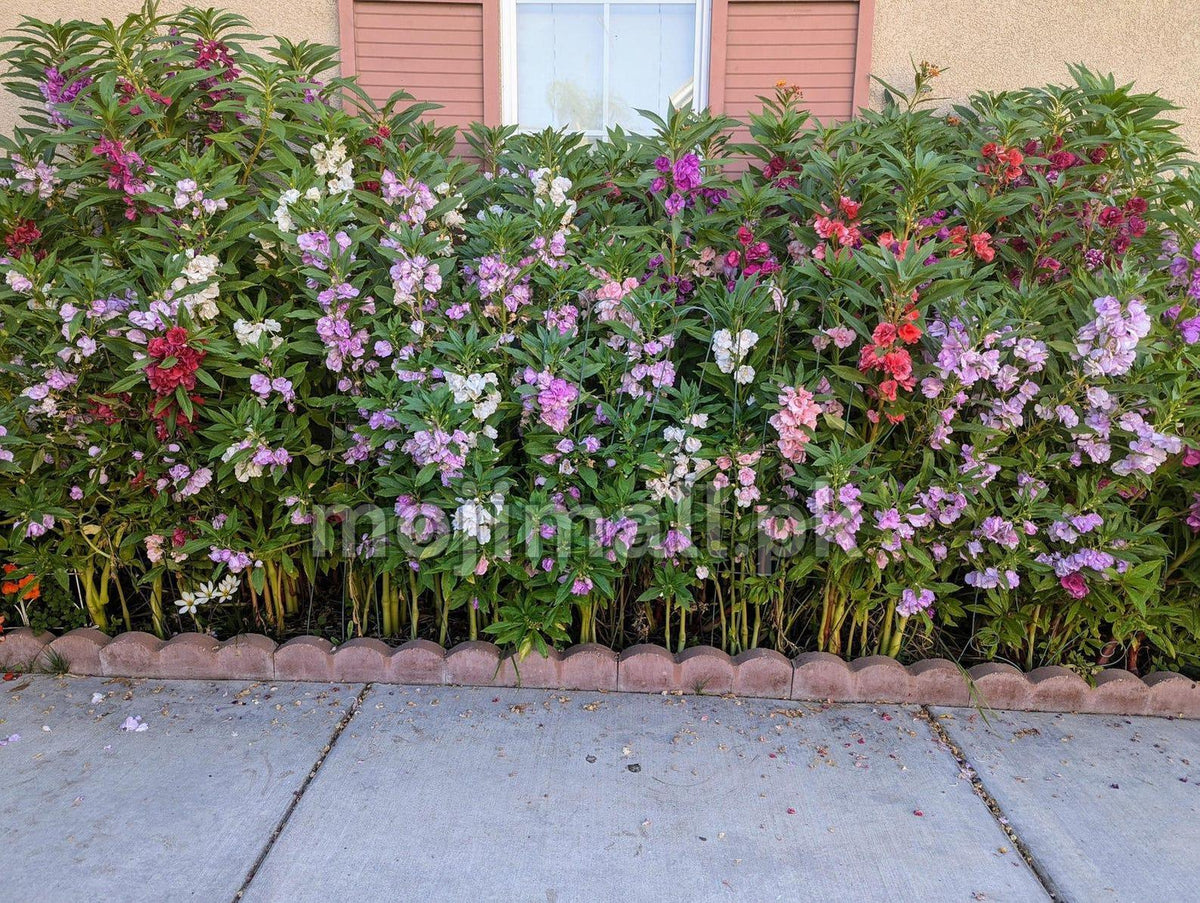
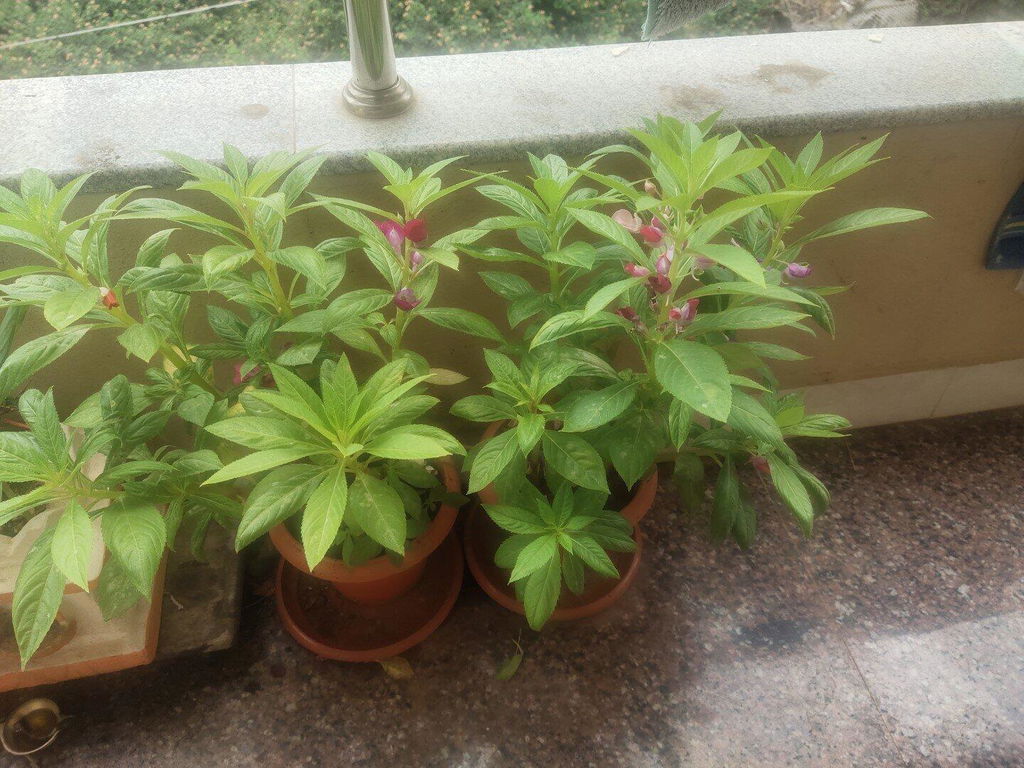
Balsam Bush Mix, locally called Gul Mehndi (گل مہندی), produces pink, red, purple and white blooms along upright, leafy stems. The flowers open among narrow green leaves, bringing colour to summer pots and garden borders.
Grow several plants together for a mixed display on balconies, beside pathways or in small garden beds. Morning sunlight with light afternoon shade suits the plants during hot weather.
Why Gardeners Love It
-
Mixed Colours: Pink, red, purple and white brighten seasonal planting.
-
Summer Display: Flowers develop along the stems as the plants grow.
-
Partial Shade Suitable: Useful for garden corners receiving gentle morning sunlight.
-
Container Friendly: Suitable for individual pots and grouped garden displays.
Best Conditions
-
Germination: Usually 7–15 days
-
Germination temperature: Around 18–24°C
-
Seed tray light: Bright, indirect light
-
Sunlight: Around 4–6 hours of morning sunlight, with afternoon shade during hot weather
-
Pot size: A 10–12-inch pot for one plant
-
Spacing: About 12–18 inches between plants
-
Plant height: Commonly around 18–30 inches
-
Soil: Moist, fertile and well-draining mix
-
First flowers: Usually around 10–12 weeks from sowing
Sowing note: In Lahore, Faisalabad, Islamabad and Rawalpindi, sow from March to April after cold weather has eased. Another sowing can be started from June to July, with seed trays protected from heavy monsoon rain. In Karachi and southern Punjab, sow from February to March, or again from August to September while warm conditions continue. In colder northern and hilly areas, sow from April to May after the risk of frost has passed.
How to Sow
- Fill a seed tray or small pots with fine, moist seed starter mix.
- Place one seed in each cell, or scatter the seeds thinly over the surface.
- Press the seeds gently into the mix without burying them, then mist lightly.
- Cover with a clear lid or loose plastic, opening daily and keeping the surface lightly moist.
- Remove the cover once seedlings appear, and carefully thin any crowded groups.
- Gradually introduce seedlings to outdoor conditions, then transplant when they have 3–4 true leaves.
Seeds can also be sown directly into their final pots or a prepared garden bed after the risk of frost has passed.
Plant Care
Keep the soil evenly moist without leaving the roots in standing water. Water at soil level and check containers regularly during hot weather. Pinch the growing tip once when plants are around 4–6 inches tall if more branching is wanted. Handle the fleshy stems gently.
Mix a small amount of Vermicompost into the final potting mix. Avoid excessive nitrogen feeding, which encourages leaves at the expense of flowers. Inspect tender shoots and leaf undersides for pests. If using Neem Oil, follow its label and test a small area first. Keep oil sprays off the blooms because they can damage the flowers.
Local Gardener Tips
- Shelter seed trays from heavy rain and strong watering.
- Keep pots away from walls that reflect intense afternoon heat.
- Leave gaps between mature plants so air can move through the foliage.
- Protect the soft stems from strong wind on balconies and rooftops.
Flowering Display
Flowers develop beside the leaves along the stems. Position containers where the blooms can be seen from the side, or arrange groups along pathways and border edges.
Remove damaged and faded flowers gently without pulling on the stems. Keep healthy leaves in place to support continued growth.
FAQs
Will one plant produce all the colours in the mix?
Each plant generally flowers in one colour. Grow several plants together for a mixed display. The number of plants in each colour can vary, so every packet may not produce equal proportions.
Will Balsam return next year?
Balsam is an annual and normally completes its life cycle in one growing season. New seedlings may appear if plants are allowed to release seeds, but these are new plants rather than the original plants returning.
Can I save seeds from my plants?
Yes. The ripe pods burst when touched, so hold a small paper bag around a nearly mature pod before collecting it. Allow the seeds to dry fully, then store them in a labelled envelope in a cool, dry place. The colours of plants grown from saved seeds may differ from the original display.
Common names: Balsam Bush Mix, Garden Balsam, Gul Mehndi, Gul-e-Mehndi, Impatiens balsamina, گل مہندی