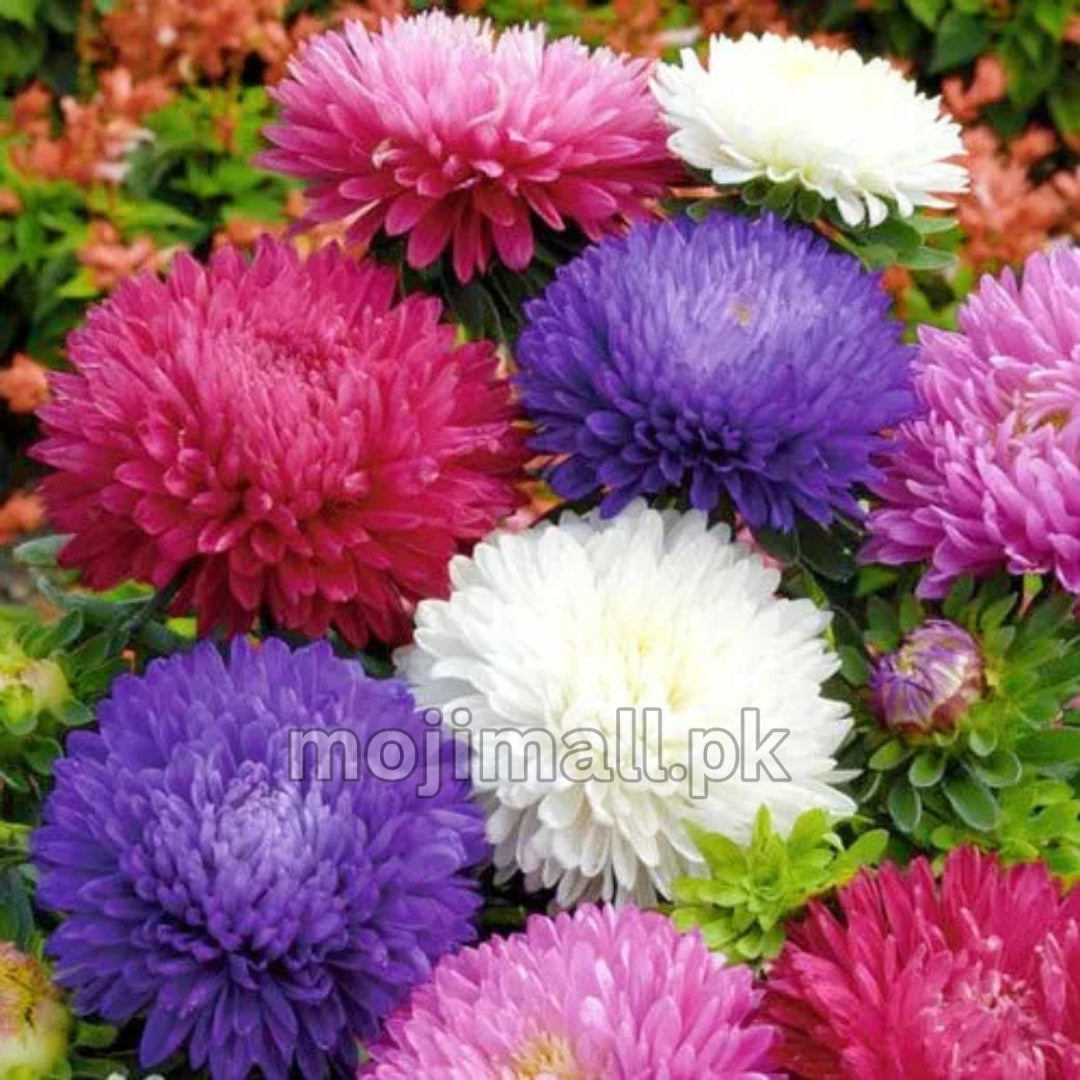
Aster Giant Mix produces large, densely petalled flowers in shades of pink, purple, lavender, red and white. The full blooms resemble colourful pompons or small chrysanthemums and appear on long, upright stems.
The tall plants add height to sunny flower beds and large containers. Their strong stems and colourful flowers also make attractive additions to bouquets and vase arrangements.
Why Grow It
- Large flowers with densely layered petals
- Mix of pink, purple, lavender, red and white
- Tall plants add height to winter flower beds
- Suitable for large pots and home garden borders
- Long stems can be used as cut flowers
- Branching plants develop several flower buds
Growing Guide
| Detail |
Recommendation |
| Best sowing time |
September to November |
| Second sowing |
Late January to February |
| Germination time |
Usually 7-14 days |
| Germination temperature |
Approximately 18-22°C |
| Sowing depth |
Approximately 0.3 cm |
| Sunlight |
At least 6 hours |
| Plant spacing |
Approximately 10-12 inches |
| Pot size |
One plant in a 12-14 inch pot |
| Mature height |
Commonly 24-36 inches |
| First flowers |
Usually 12-16 weeks after sowing |
| Plant type |
Cool-season annual |
Best Time
China aster grows best in mild, sunny weather. In most parts of Pakistan, sow from September to November for flowers from late winter into spring. A smaller second sowing can be made from late January to February for later spring flowers.
In Lahore, Faisalabad, Islamabad and Rawalpindi, sow from September to November or again from late January to February. Give the plants full winter sunlight and protect young seedlings from prolonged rain.
In hotter areas such as Karachi and southern Punjab, sow from October to December after the strongest summer heat has eased. Protect developing plants from unusually hot spring afternoons.
In colder northern and hilly areas, sow from March to April after the risk of hard frost has passed. Start seeds in a protected tray if outdoor conditions remain too cold.
How to Sow
- Fill a seedling tray or small pots with a fine, moist seed-starting mixture.
- Sow the seeds thinly and cover them with approximately 0.3 cm of mixture.
- Water gently using a fine spray.
- Keep the mixture lightly moist in a bright location at approximately 18-22°C.
- Transplant after the seedlings develop 3-4 true leaves.
Leave approximately 10-12 inches between the final plants. Move seedlings with some mixture around their roots and water them gently after transplanting.
Starting seeds in a tray makes it easier to protect the small seedlings from heavy rain, pests and sudden temperature changes.
Best Soil
Use fertile soil that remains lightly moist while allowing excess water to drain. China asters can develop root and stem problems when planted in heavy soil that stays wet for long periods.
Mix garden soil with a suitable potting medium to improve drainage and airflow. A small amount of vermicompost can be added before transplanting.
Grow one tall plant in a 12-14 inch pot. Wider containers can hold several plants when they have enough spacing and airflow.
Plant Care
- Provide at least 6 hours of sunlight.
- Give plants full winter sun where possible.
- Add light afternoon shade as spring becomes hot.
- Water when the upper soil layer begins to dry.
- Keep the soil evenly moist during bud formation.
- Apply water around the base instead of over the leaves.
- Leave enough space between plants for airflow.
- Support tall stems in exposed or windy locations.
- Remove faded flowers and badly damaged leaves.
- Check tender growth for aphids and leafhoppers.
- Protect young seedlings from forceful watering.
- Avoid excessive nitrogen and heavy feeding.
Once buds begin forming, mix 1 teaspoon of Flowers Fertilizer in 1 litre of water. Apply through the soil or as a light spray and repeat every 10-15 days if needed.
If aphids or leafhoppers appear, apply Neem Oil according to its directions. Spray during the cooler evening hours and avoid open flowers.
Stem Support
Giant aster plants can become top-heavy as their flower buds develop. Install a thin stake while the plant is still young and secure the main stems loosely with soft ties.
In beds, several plants can support one another when they are correctly spaced. Avoid crowding them tightly because restricted airflow can increase leaf and stem problems.
Flowering
Plants commonly begin flowering approximately 12-16 weeks after sowing. The exact timing depends on the sowing date, temperature, sunlight and transplanting conditions.
Each plant can develop several large flowers on branching stems. Colour and flower shape may vary naturally because the packet contains a mixture.
Remove faded flowers regularly so the remaining buds can continue developing. For a vase, cut a stem when the outer petals have opened but the flower centre remains firm. Place the cut stem in clean water promptly.
Local Tips
- Use a heavy pot so tall plants do not fall over easily.
- Install stem supports before the flower heads become heavy.
- Sow a second small batch after 3-4 weeks for later flowers.
- Keep fallen petals and damaged leaves away from the plant base.
- Check drainage holes after prolonged winter rain.
- Turn pots occasionally if sunlight reaches them from one direction.
- Cut flowers during the cooler morning or evening hours.
FAQs
Is China Aster the same as a perennial garden aster?
No. This product is Callistephus chinensis, commonly called China aster or annual aster. Perennial garden asters belong to different botanical groups and return for several years under suitable conditions.
Why did a healthy aster plant suddenly wilt?
Sudden wilting can be caused by Fusarium wilt, a disease that remains in affected soil. Remove the damaged plant and its surrounding mixture. Do not reuse that mixture for another aster plant.
What causes yellow, twisted or unusually clustered growth?
These symptoms may indicate aster yellows, a disease spread by leafhoppers. There is no treatment for an affected plant. Remove it promptly and control leafhoppers around the remaining plants.
Can I save seeds from Aster Giant Mix?
Yes. Leave a few healthy flowers until their centres become dry and fluffy. Collect the mature seeds and store them in a labelled paper envelope. New plants may differ from their parent in colour or flower shape.
Why are my aster flowers smaller than expected?
Small flowers can result from crowded roots, insufficient sunlight, extreme heat or weak plant growth before bud formation. Improve spacing and light, maintain regular watering and avoid letting the plant become severely stressed.
Common Names: Aster Giant Mix, China Aster, Giant China Aster, Callistephus chinensis