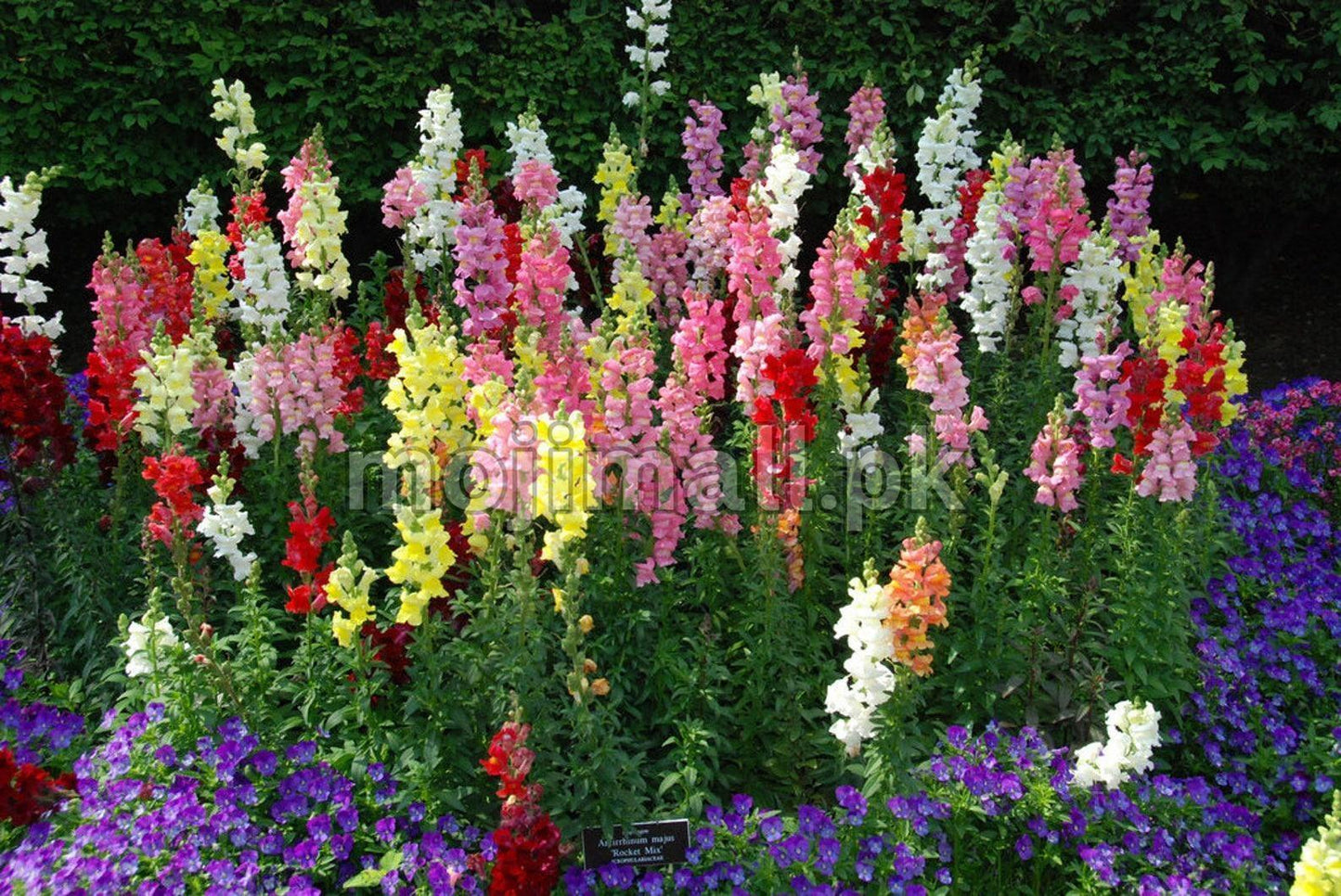
Antirrhinum Mix, commonly called Snapdragon, produces tall spikes of colourful flowers in shades of pink, red, yellow, orange and white. Each two-lipped bloom resembles a tiny dragon’s mouth. The upright stems add height behind shorter winter flowers and can also be cut for vases.
Native to southwestern Europe, Antirrhinum grows best during cool, mild weather. In Pakistan, it is usually grown through winter and early spring, producing its strongest flower display before the arrival of summer heat. The flowers also attract bumblebees and other visiting insects.
Why Grow It
-
Mixed Colours: One packet produces flowers in several bright and soft shades.
-
Tall Display: Upright spikes add height behind lower-growing winter flowers.
-
Long Flowering: Each spike opens gradually from the bottom upward.
-
Cut Flowers: Tall stems are suitable for vases and arrangements.
Best Conditions
-
Germination: Usually 7–14 days
-
Temperature: Around 16–24°C
-
Sunlight: At least 6 hours
-
Pot size: 8–12-inch pot or larger
-
Spacing: About 12–18 inches between plants
-
Plant height: Usually around 24–36 inches
-
Soil: Moist, moderately fertile and well-draining mix
Sowing note: In Lahore, Faisalabad, Islamabad and Rawalpindi, sow from late September to November. In hotter areas such as Karachi and southern Punjab, sow from October to December after the strongest summer heat has eased. In colder northern and hilly areas, start seeds in protected trays from February to March, then transplant after the risk of hard frost has passed.
How to Sow
Start Antirrhinum in a seedling tray or small pots. The tiny seeds need light to germinate and should remain near the surface.
- Fill the tray or pots with fine, moist seed starter mix.
- Scatter the tiny seeds thinly and evenly over the surface.
- Press them gently against the mix without covering them.
- Water the surface gently using a fine spray.
- Keep the mix lightly moist in a bright, cool location.
- Transplant after 3–4 true leaves appear, leaving 12–18 inches between plants.
Plant Care
Water when the upper layer of the mix begins to dry. Keep the soil evenly moist while the plants are growing, but never leave the roots waterlogged. Water near the soil early in the day so the leaves remain dry overnight.
Mix a small amount of Vermicompost into the final soil before transplanting. Tall plants may need a slim stake in exposed gardens or rooftop pots. If aphids or thrips gather around the tender tips and buds, spray Neem Oil on the affected growth, avoiding open flowers.
Local Gardener Tips
- Protect surface-sown seeds from strong watering and heavy rain.
- Give plants full winter sun, then light afternoon shade as spring becomes warmer.
- Pinch established plants at 3–4 inches for several shorter flower spikes.
- Leave enough space for airflow, especially during foggy or humid weather.
Flowering
Plants usually begin flowering around 3–4 months after sowing. The flowers open gradually from the bottom of each spike. Once most of a spike has faded, cut it just above healthy leaves to encourage side shoots and later blooms.
For vases, cut the stem when the lower third of the flowers has opened. Place it upright in clean water soon after cutting.
FAQs
What causes yellow spots and brown powder under the leaves?
This is likely Snapdragon rust. Remove affected leaves promptly, improve airflow and avoid wetting the leaves, especially late in the day.
Will Antirrhinum return next season?
Antirrhinum is a short-lived perennial but is generally grown as a cool-season annual in Pakistan. Plants may survive or drop seeds in mild areas, but strong summer heat and humidity often prevent them from returning.
Common names: Antirrhinum Mix, Snapdragon, Garden Snapdragon, Common Snapdragon, Dog Flower