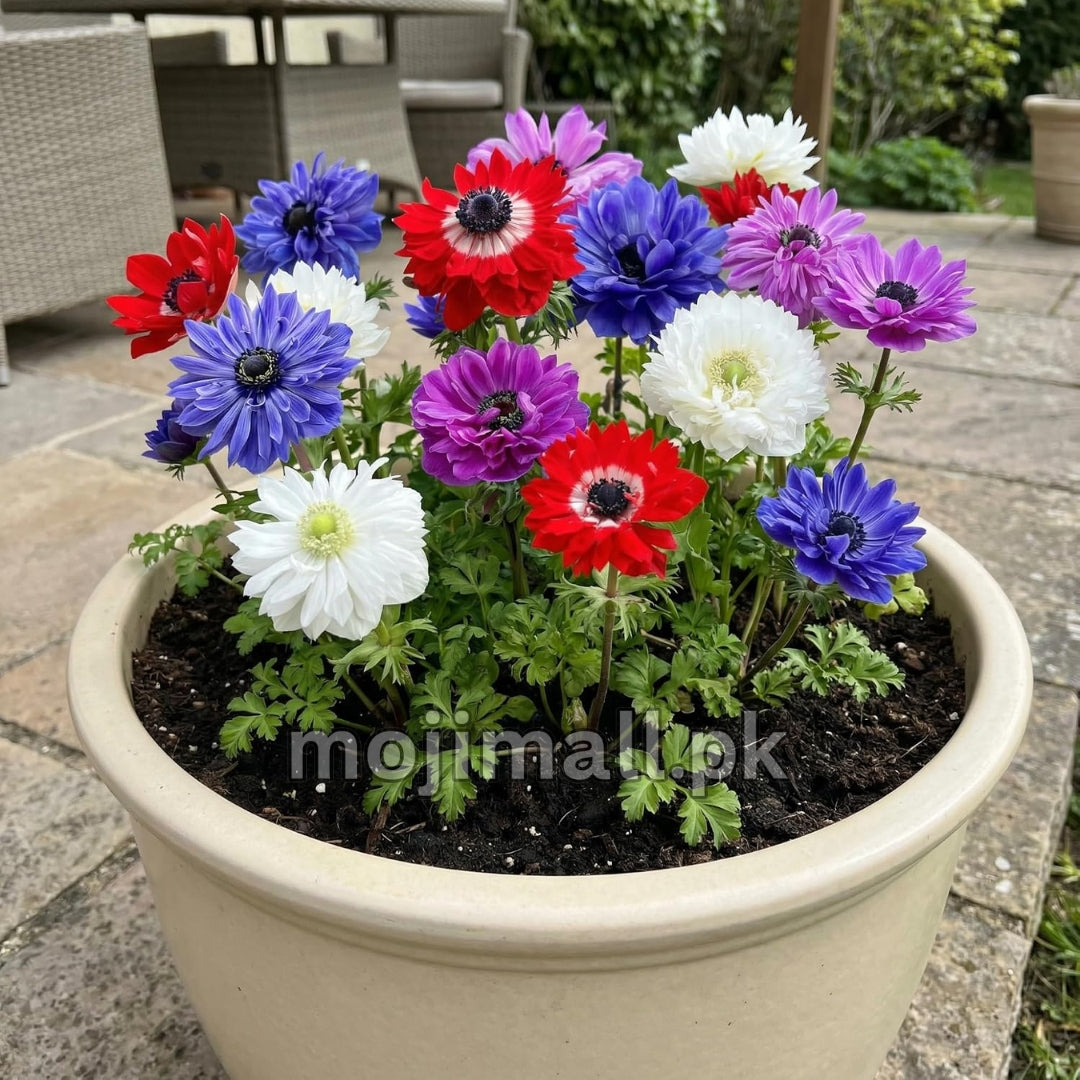
Anemone Mix produces compact plants topped with bold, layered flowers in shades of blue, pink, rose, red and white. Many blooms have dark contrasting centres that give them a poppy-like appearance. They create a colourful display in pots, front borders and grouped winter planting, while the stems can also be cut for small vases.
Native to the Mediterranean region and western Asia, Anemone grows best during cool weather. In Pakistan, the plants develop through winter and begin flowering from late winter into spring.
Why Grow It
-
Mixed Colours: Several bright flower colours from one packet.
-
Layered Blooms: Full flowers with attractive contrasting centres.
-
Compact Growth: Suitable for pots and the front of flower beds.
-
Cut Flowers: Blooms can be used in small indoor arrangements.
-
Germination Tested: Anemone seeds with a high germination rate.
Best Conditions
-
Germination: Usually 2–5 weeks
-
Temperature: Around 15–21°C
-
Sunlight: At least 4–6 hours
-
Pot size: An 8–12-inch pot or larger
-
Spacing: About 6–8 inches between plants
-
Plant height: Usually around 6–12 inches
-
Flower size: Approximately 2–3 inches
-
Soil: Light, moderately fertile and well-draining mix
Sowing note: In Lahore, Faisalabad, Islamabad and Rawalpindi, sow from October to November. In hotter areas such as Karachi and southern Punjab, sow from November to December once the weather becomes mild. In colder northern and hilly areas, start the seeds in protected trays during February or March and move them outside after the risk of hard frost has passed.
How to Sow
Start Anemone Mix in a seedling tray or small pots where moisture is easier to manage.
- Fill the tray or pots with fine, moist seed starter mix.
- Sow one seed per cell or space them thinly over the surface.
- Cover the seeds with a very thin layer of the mix.
- Water the surface gently using a fine spray.
- Keep the container in a bright, cool place with light moisture.
- Transplant gently after 4–6 true leaves appear, spacing plants 6–8 inches apart.
Plant Care
Water when the upper layer of the mix begins to dry. Keep the soil evenly moist during active growth, but never allow the pot to remain waterlogged because the roots can rot.
Mix a small amount of Vermicompost into the final potting mix before transplanting. Feed lightly after flower buds begin forming. Excess feeding can create more leaves with fewer flowers.
If aphids, thrips or whiteflies appear, apply Neem Oil to the affected foliage, avoiding open flowers.
Local Gardener Tips
- Protect young seedlings from strong watering and heavy rain.
- Give full winter sun and light afternoon shade as spring becomes warmer.
- Shelter flowering plants from strong rooftop winds.
Flowering
Seed-grown plants usually begin flowering around 4–5 months after sowing. Remove faded blooms to keep the plants neat and encourage later buds.
For indoor arrangements, cut the stems when the coloured buds have just started opening. Fresh stems can remain attractive for around 5–7 days in clean water.
FAQs
Why are my Anemone seedlings growing slowly?
Early growth is naturally gradual, especially during cold weather. Keep the seedlings in bright light with steady moisture and avoid trying to speed them up with heavy feeding.
Will Anemone Mix return next season?
The underground corms may produce new growth after their summer rest. Their survival depends on good drainage because prolonged heat combined with wet soil can cause rotting. Many gardeners grow Anemone as a seasonal winter flower.
Common names: Anemone Mix, Garden Anemone, Poppy Anemone, Windflower