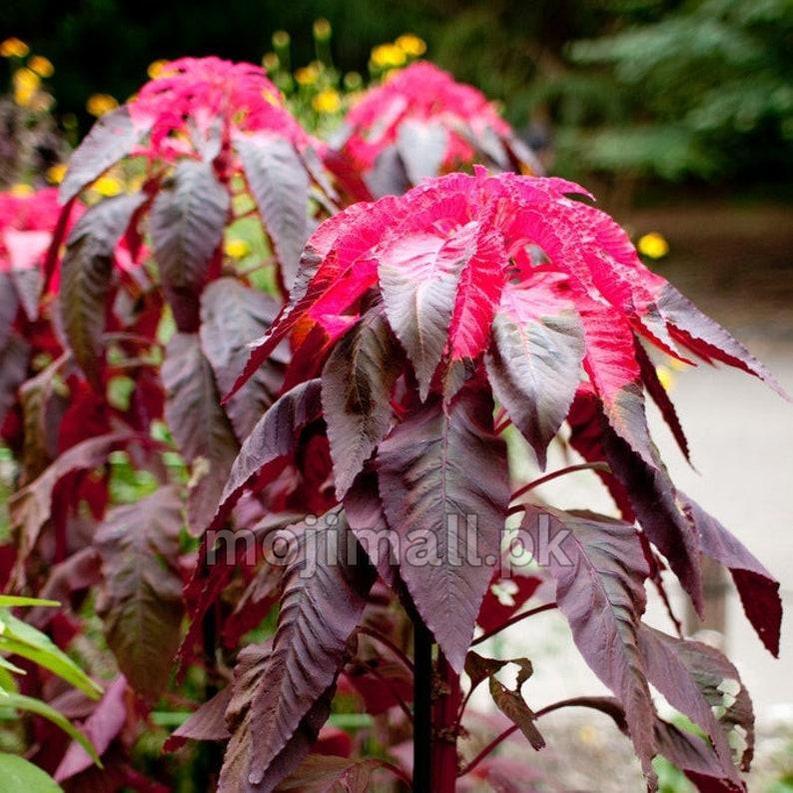
Amaranthus Bicolor (Molten Fire) develops vivid crimson-red leaves at the tops of upright stems, creating a flame-like splash of colour above the darker foliage. The lower leaves range from green and bronze to deep burgundy, giving each plant a strong contrast as it matures.
Its broad, arching leaves make an attractive feature in summer borders, large pots and entrance displays. Plant several together for a bold group, or grow one beside shorter flowering plants where its colourful upper growth remains clearly visible.
Why Gardeners Love It
-
Fiery Red Tops: Bright crimson upper leaves create the distinctive Molten Fire appearance.
-
Contrasting Foliage: Green, bronze and burgundy lower leaves complement the red growth.
-
Upright Display: Adds height and colour behind shorter plants in garden borders.
-
Warm-Weather Growth: Develops well during the summer growing season.
-
Pot Friendly: Makes a colourful feature in a roomy container.
-
Seed Quality: Amaranthus seeds tested for germination, with a high germination rate.
Best Conditions
-
Germination: Usually 7–14 days
-
Germination temperature: Around 20–25°C
-
Seed tray light: Bright, indirect light
-
Sunlight: At least 6 hours, with afternoon protection during extreme heat
-
Pot size: A 12–14-inch pot for one plant
-
Spacing: About 18–24 inches between plants
-
Plant height: Usually around 3–4 feet
-
Soil: Moderately fertile, moist and well-draining mix
-
Strong foliage colour: Develops as the plants mature
Sowing note: In Lahore, Faisalabad, Islamabad and Rawalpindi, sow from March to April once the weather is consistently warm. Another sowing can be started from June to July with protection from heavy monsoon rain. In hotter areas such as Karachi and southern Punjab, sow from February to April and shelter young seedlings from intense afternoon heat. In colder northern and hilly areas, sow from April to May after frost has passed and the soil has warmed.
How to Sow
- Fill a seed tray or small pots with seed starter mix and moisten it gently.
- Scatter the seeds thinly over the surface, leaving small gaps to avoid overcrowding.
- Press the seeds gently onto the mix. Do not bury the tiny seeds deeply.
- Mist lightly and cover loosely with a clear lid, lifting it daily for ventilation.
- Remove the lid when seedlings appear and carefully thin any crowded patches.
- Transplant when seedlings have 3–4 true leaves, keeping their root balls intact. Water gently afterwards.
Plant Care
Water regularly while the plants establish, then allow the upper layer of soil to begin drying between waterings. Avoid leaving containers in standing water. Remove badly damaged lower leaves carefully and support stems with a cane if they lean in exposed positions.
Mix a small amount of Vermicompost into the soil before transplanting. Avoid excessive feeding, which can dull foliage colour. Check leaf undersides and new growth for aphids. If needed, apply Neem Oil according to its label, testing a small area first and spraying away from strong sunlight.
Local Gardener Tips
- Protect newly sown seeds from heavy rain and strong watering.
- Check pot moisture daily during hot, windy weather.
- Keep containers sheltered from strong rooftop or balcony winds.
Colouring and Display
Young plants develop their leafy framework before the brightest upper growth becomes prominent. As they mature, crimson leaves spread outward around the growing tips, producing the characteristic fountain-like display.
Place Molten Fire towards the middle or back of a border, or use it as the central feature in a large mixed container. White flowers, silver foliage and fresh green leaves provide attractive companions. Keep healthy upper leaves intact so the plant retains its full colour display.
FAQs
Can I sow Molten Fire directly in the garden?
Yes. Sow into a finely prepared bed once the soil is warm and frost has passed. Press the seeds onto the surface, cover only very lightly and water gently. Thin the seedlings once established, leaving the strongest plants in their final positions.
Why are my seedlings collapsing at soil level?
A soft or narrowed stem near the soil can indicate damping-off. Affected seedlings usually cannot be saved. Remove them, improve ventilation and restart in clean containers with fresh seed starter mix. Avoid keeping the mix saturated.
Will Molten Fire grow back after winter?
Molten Fire is an annual and completes its life cycle within one growing season. Frost damages the plant, and keeping it protected does not make it a permanent shrub. Start new plants from seed for the next display.
Common names: Amaranthus Bicolor, Molten Fire Amaranth, Summer Poinsettia, Joseph’s Coat