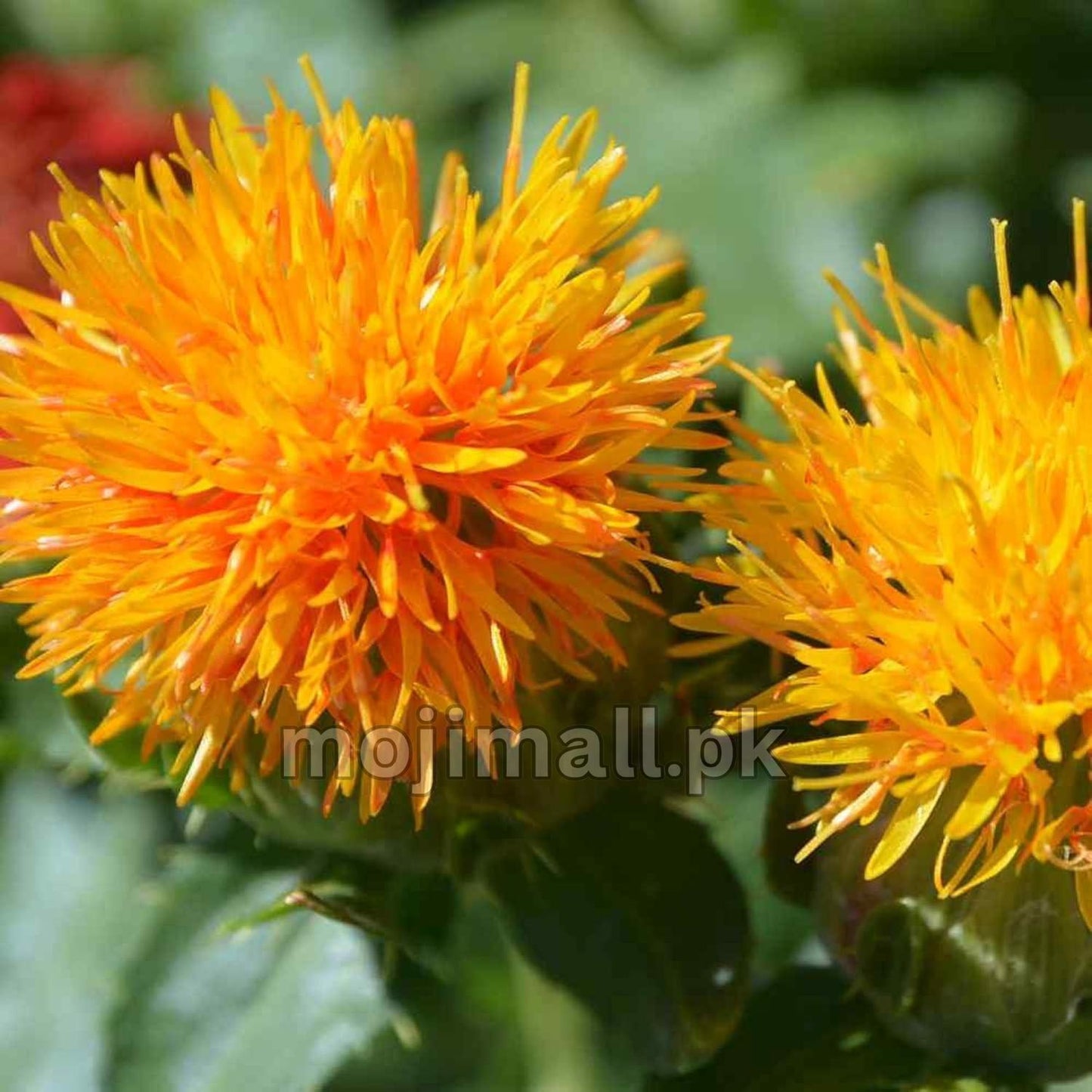
Safflower, also known as Gul Kurtam (گل کرتم) or Kusum, produces tufted, thistle-like flowers in yellow, orange and reddish shades. Each flower head sits above a rounded base wrapped in pointed green bracts, giving the plant a distinctive appearance in sunny borders.
Its upright, branching stems suit garden beds and deep pots, while the flowers can be enjoyed fresh or dried in arrangements. This annual has a long history of cultivation for its colourful petals and oil-bearing seeds.
Why Gardeners Love It
-
Warm Colours: Yellow flowers deepen towards orange and reddish tones as they mature.
-
Distinctive Shape: Tufted flowers and sculpted green buds add texture to mixed displays.
-
Fresh or Dried: Suitable for bouquets and dried flower arrangements.
-
Dry Weather Tolerance: Established plants handle short dry periods well.
-
Germination Tested: Seeds with a high germination rate.
Best Conditions
-
Germination: Usually 10–14 days
-
Germination temperature: Around 20–22°C
-
Sunlight: At least 6 hours
-
Pot size: A 12-inch pot, at least 12 inches deep, for one plant
-
Spacing: About 9–12 inches between plants
-
Plant height: Usually around 2–3 feet
-
Soil: Loose, moderately fertile and well-draining mix
-
First flowers: Often around 10–14 weeks; autumn sowings may take longer
Sowing note: In Lahore, Faisalabad, Islamabad and Rawalpindi, sow from October to November. In hotter areas such as Karachi and southern Punjab, use the same window once the strongest summer heat has eased. In colder northern and hilly areas, sow from March to April after the risk of hard frost has passed.
How to Sow
- Loosen the soil in the final bed or fill a deep pot with potting mix.
- Moisten the soil and level the surface, breaking up any large clumps.
- Sow one or two seeds at each planting point, around ½ inch deep.
- Cover with fine soil and water gently to settle it around the seeds.
- Keep the seeded soil lightly moist until seedlings appear.
- Once true leaves develop, snip off weaker seedlings and retain the strongest.
Plant Care
Water deeply when the upper inch of soil begins drying, then allow excess water to drain. Keep moisture more consistent while buds are developing. Avoid frequent shallow watering or leaving the roots in constantly wet soil.
Mix a small amount of Vermicompost into the soil before sowing. Frequent feeding is usually unnecessary in reasonably fertile soil. Check developing buds for aphids and treat affected growth with Neem Oil at its labelled dilution, avoiding open flowers.
Local Gardener Tips
- Wear gloves when handling mature stems because the leaves and flower heads can have sharp points.
- Stagger small sowings by 2–3 weeks to spread the flowering display.
- In very hot southern locations, provide light afternoon shade while retaining good morning sunlight.
Flowering and Cutting
For fresh arrangements, cut stems when the flowers have begun opening and visible colour is showing. Completely green, unopened heads may fail to open after cutting. Remove leaves below the waterline and place the stems in clean water promptly.
For drying, allow the flowers to open fully before cutting. Hang small bunches upside down in a dry, shaded, well-ventilated place, leaving space between the flower heads.
FAQs
Is Safflower the same as saffron?
No. True saffron comes from the stigmas of Crocus sativus. Safflower petals have traditionally been used to add colour to food, but they do not provide saffron’s distinctive flavour or aroma.
Why are my seedlings staying short with leaves close to the soil?
Safflower naturally passes through a rosette stage while developing its taproot. Healthy green plants may remain low for several weeks before their stems lengthen. Avoid adding extra fertilizer simply to force taller growth.
Common names: Safflower, Gul Kurtam, Carthamus tinctorius, Kusum, False Saffron, Dyer’s Saffron, گل کرتم