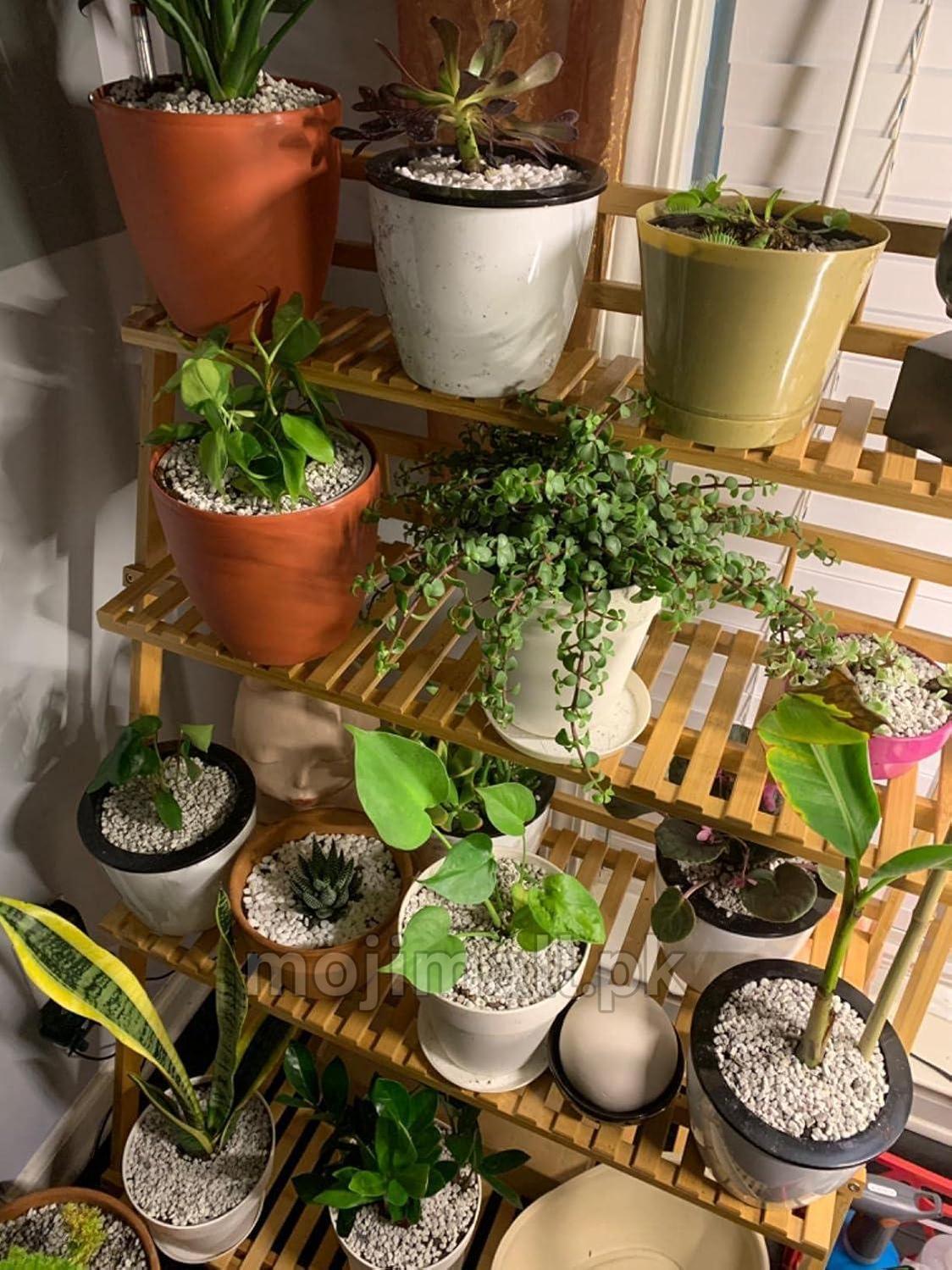
Pumice Stone is a porous volcanic material used to improve drainage, airflow and structure in potting mixtures. The 2–6mm particle size is suitable for succulents, cacti, bonsai and indoor plants grown in pots.
This pumice has been washed and is ready to mix with soil. Unlike lightweight perlite, it is heavy enough to remain distributed through the potting mixture instead of floating towards the surface during watering.
Why Use It
- Improves drainage in potting soil
- Creates lasting air spaces around roots
- Helps prevent soil from becoming tightly compacted
- Holds a small amount of moisture within its pores
- Remains stable for a long time
- Heavier than perlite and less likely to float
- Suitable for bonsai, succulents and cacti
- Washed and ready to use
Pumice does not provide complete plant nutrition. Combine it with suitable soil, compost or another nutrient-containing ingredient according to the plant’s needs.
Product Details
| Detail |
Information |
| Material |
Natural volcanic pumice |
| Particle size |
Approximately 2–6mm |
| Preparation |
Washed |
| Main purpose |
Drainage, aeration and soil structure |
| Available packs |
1kg, 5kg, 25kg and 100kg |
| Suitable for |
Bonsai, cacti, succulents and indoor plants |
| Application |
Mixed through the growing medium |
| Reusability |
May be reused when clean and disease-free |
Natural variations in colour, shape and particle size may occur because pumice is a mineral material rather than a manufactured uniform bead.
How It Works
Each pumice particle contains many small pores. These pores hold some water while the spaces between the particles allow excess water to move through the potting mixture.
This balance makes pumice useful for plants that need good drainage but should not dry immediately after watering. Its firm particles also help the growing medium resist compaction over time.
Pumice improves the physical structure of soil, but it cannot correct blocked pot drainage or an unsuitable watering routine by itself.
Mixing Guide
| Use |
Suggested Amount |
| Succulents and cacti |
One part pumice with two parts potting mix |
| Bonsai |
Approximately 30–50%, depending on the other ingredients |
| Indoor plants |
Approximately 20–25% |
| Rooting cuttings |
Approximately 30–40% |
| Large pots and grow bags |
Approximately 15–25% |
| Heavy container soil |
Begin with approximately 25% |
These proportions are starting points. Increase drainage for plants that dislike wet soil and use less pumice for plants that need consistently moist conditions.
How to Use
- Place the required soil or potting medium in a clean container.
- Add the appropriate amount of washed pumice.
- Mix thoroughly so the particles are spread throughout the root area.
- Fill the pot without pressing the mixture too firmly.
- Water slowly and confirm that excess water leaves through the drainage holes.
Mixing pumice throughout the growing medium is more useful than placing a separate layer only at the bottom of the pot.
Succulents
Succulents and cacti need a mixture that releases excess water quickly. Mix one part pumice with approximately two parts of a suitable cactus and succulent potting mix.
A higher percentage may be used for plants that are sensitive to prolonged moisture, particularly during humid or rainy weather. Pots exposed to strong summer heat may dry more quickly, so check the mixture before increasing the pumice content.
This material can be used for aloe vera, jade plant, snake plant, echeveria, haworthia, adenium and many common cacti.
Bonsai Mix
The 2–6mm size provides useful structure for many bonsai mixtures. Its firm particles help maintain spaces for air and water while supporting fine root development.
Combine pumice with other suitable bonsai ingredients according to the tree species and local climate. Trees that prefer more moisture need a different balance from varieties that require rapid drainage.
Use pots with open drainage holes and check moisture below the surface before watering again.
Indoor Plants
Add approximately one part pumice to three or four parts regular potting mix for indoor plants. It is particularly useful when nursery soil becomes dense, shrinks into a hard mass or remains wet for too long.
Use it for pothos, philodendron, monstera, rubber plant and other houseplants when the existing mixture needs better structure.
The correct watering frequency may change after repotting because an airier mixture can dry differently from the old soil.
Large Pots
Pumice may be mixed into the root area of large containers and grow bags. It is useful where garden soil becomes compact after repeated watering.
Because pumice is heavier than perlite, adding a large amount also increases the total weight of rooftop or balcony containers. Consider the final weight before using it in very large planters.
For broad garden beds, compost and other locally available soil amendments may be more practical. Pumice is most useful where permanent structure and controlled drainage are needed around selected plants.
Pumice or Perlite
Both pumice and perlite improve drainage and airflow, but they behave differently inside a pot.
Pumice is heavier, stays distributed more evenly and provides firmer long-term structure. Perlite is much lighter and is useful when reducing container weight is important.
Pumice also holds a small amount of water within its pores. Perlite mainly creates larger air spaces and allows water to move through the mixture quickly.
Watering
A pumice-containing mixture may drain faster than ordinary garden soil, but its internal pores can remain moist after the surface appears dry.
Check below the surface before watering. For small pots, lifting the container can also help you judge how much water remains.
During the monsoon, protect sensitive succulents and bonsai from continuous rain. During hot rooftop conditions, inspect pots more frequently because open mixtures can dry faster.
Local Tips
- Use it to improve compact nursery soil when repotting plants.
- Increase the proportion carefully during humid or rainy weather.
- Check rooftop load before adding large amounts to heavy containers.
- Combine it with nutrient-containing ingredients for long-term plants.
- Keep drainage holes open and raise outdoor pots during heavy rain.
- Water slowly after repotting so the mixture settles around the roots.
- Store unused pumice in a clean, closed bag away from dirty water.
FAQs
Why does pumice become darker after watering?
Water enters the small pores and makes the particles appear darker. The colour becomes lighter again as the pumice dries. This is normal and can help indicate how much moisture remains near the surface.
Will pumice change the pH of my soil?
Pumice is generally used as a stable structural amendment and should not be relied upon to raise or lower soil pH. Test the soil separately if a plant requires a specific pH range.
Can washed pumice still contain fine particles?
Some small particles may appear during transport as pieces rub together. If the material produces more dust than preferred, rinse it briefly in a container and allow the fine material to drain away before mixing.
Can pumice be reused after repotting?
Yes. Remove old roots and soil, wash the particles and allow them to dry. Do not reuse material taken from a plant affected by serious root disease or unknown contamination.