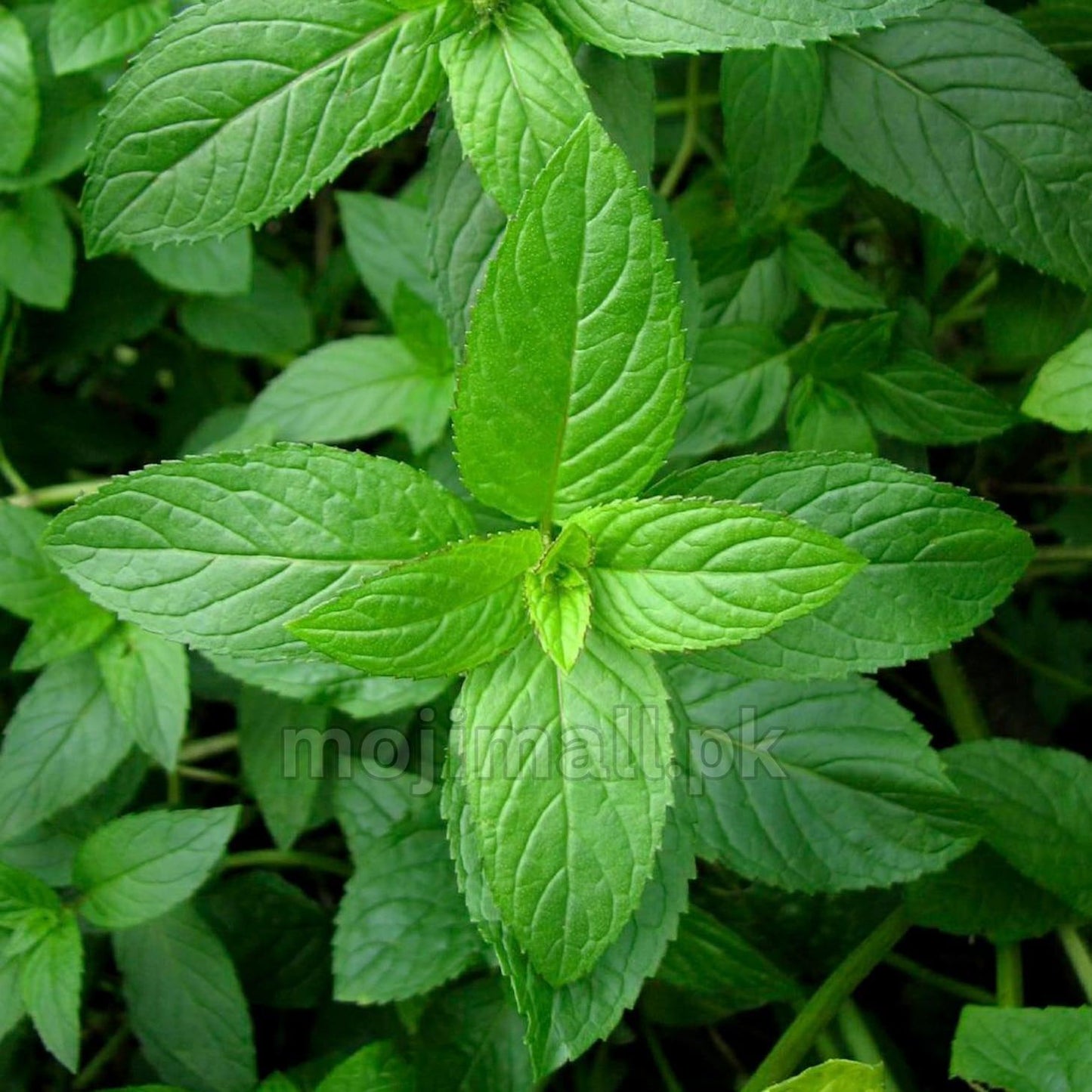
Peppermint Seeds produce leafy plants with a fresh menthol aroma and a cool aftertaste. The leaves are especially useful for tea, lemonade, iced drinks, syrups, fruit dishes, chocolate desserts and garnishes.
Peppermint develops spreading underground stems as it matures, so growing it in a container makes it easier to manage in a home garden.
Why Grow It
-
Distinct Flavour: Provides the strong, cooling taste associated with peppermint.
-
Repeated Pickings: Produces fresh shoots after regular cutting.
-
Flexible Light: Grows in full sun or partial shade.
-
Edible Flowers: Milder mint flavour and can be used as a garnish.
Best Conditions
-
Germination: Usually 7–14 days
-
Temperature: Around 18–24°C
-
Sunlight: Around 4–6 hours
-
Pot size: A wide 10–12-inch pot
-
Spacing: About 12 inches between plants
-
Plant height: Usually around 12–24 inches
-
Soil: Rich, moisture-retentive and well-draining potting mix
Pakistan sowing note: Peppermint seed is easiest to start in mild weather. Karachi and Southern Punjab can use the cooler period from October to February. In Lahore and Faisalabad, sow from October to November or February to March, while March and April are better suited to Islamabad and Rawalpindi. In northern hilly areas, sow after the final frost.
How to Sow
- Moisten a fine seed starter mix and fill a tray or small pot.
- Scatter a small amount of seed evenly across the surface.
- Press the seeds gently into the mix and leave them uncovered.
- Mist the surface and cover the tray with a clear lid or plastic cover.
- Keep it in bright, indirect light at around 18–24°C.
- Open the cover daily for airflow and do not let the surface dry out.
- Thin or transplant the seedlings after they develop several true leaves.
Plant Care
Peppermint prefers more moisture than herbs such as rosemary or oregano. Water established plants when the top of the potting mix starts to dry, checking more often during hot weather. Morning sun with afternoon shade works well on hot balconies and rooftops.
Pick the growing tips often to encourage fresh side shoots. After flowering, older stems can be cut back to about 2 inches above the soil to encourage new growth. Add compost when preparing the pot, but avoid frequent heavy feeding.
Local Gardener Tips
- Choose a wide pot to accommodate spreading roots.
- Keep pots off bare garden soil so runners cannot escape.
- Divide and repot plants when the container becomes crowded.
- Check leaves for dusty orange, yellow or black rust spots.
- Remove weak seedlings only after true leaves appear.
Harvesting
Start harvesting when the plant has several healthy stems. Cut the top 2–3 inches of a shoot just above a pair of leaves. Young shoot tips usually have the strongest flavour, and regular picking encourages more growth.
Use the leaves fresh, freeze them or dry them in a shaded, airy place. Freezing usually preserves more of their fresh flavour than drying.
FAQs
Can peppermint grow indoors?
Yes. Place it beside a bright window and use a pot with drainage holes. Indoor plants still need regular watering and good airflow.
Can peppermint survive winter?
Yes. Peppermint is a perennial. In colder areas, the stems may die back after frost, but the roots usually survive and produce fresh shoots when spring arrives.
Why can seed-grown peppermint plants differ?
Peppermint is a natural hybrid, so seedlings may vary slightly in flavour, aroma and growth. Keep the strongest plants with the peppermint scent you prefer.
Common names: Peppermint, Mint, Brandy Mint