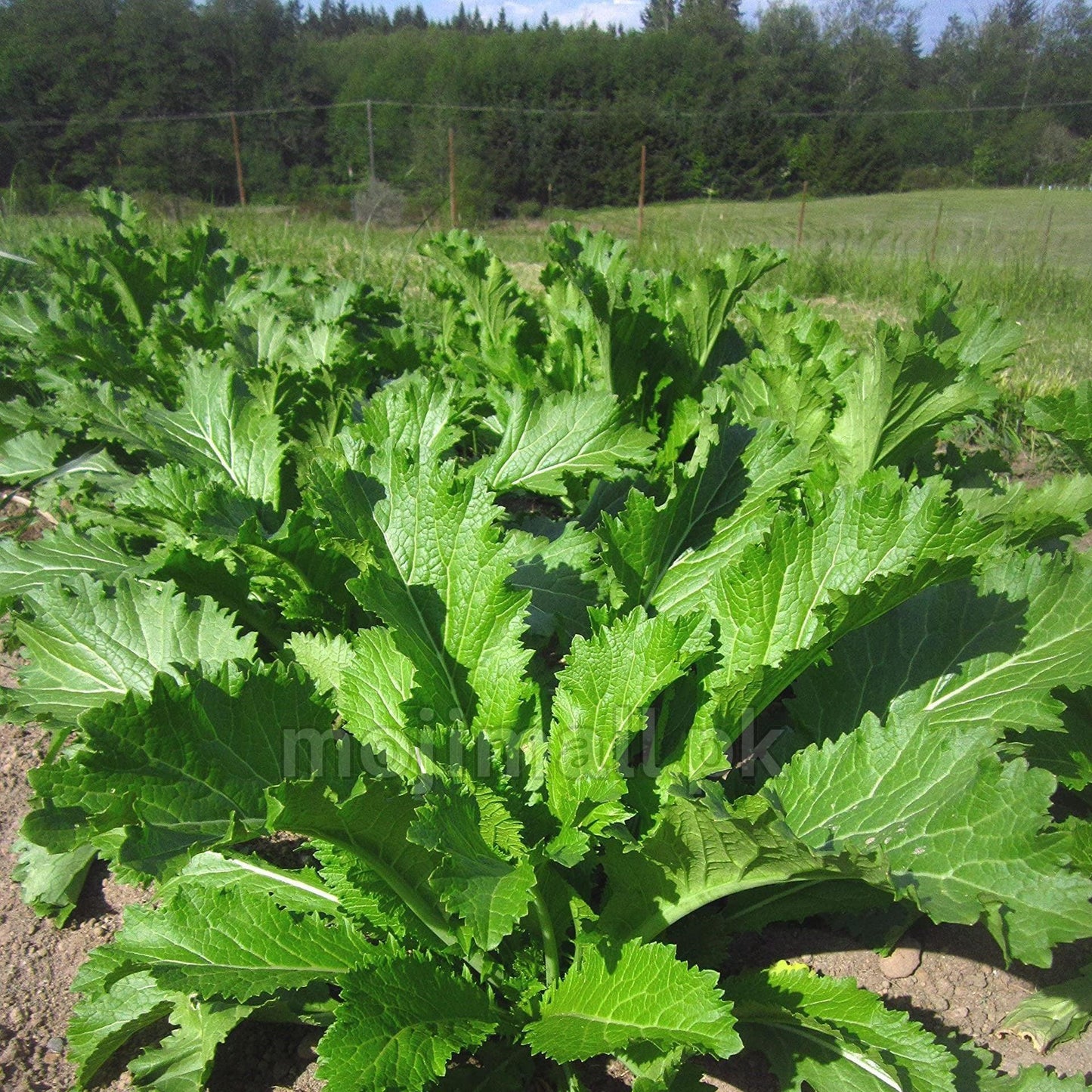
Desi Mustard Saag produces broad green leaves with a rich, slightly sharp mustard flavour. The leaves become soft after cooking and are used for traditional sarson ka saag. They can be cooked alone or combined with spinach, bathua or fenugreek and served with makki ki roti, chapati or rice.
Mustard greens originated around Central Asia and have been grown across South Asia for centuries. They became a winter favourite in Punjab, where the fresh leaves are slow-cooked with spices to prepare sarson ka saag.
Why Grow It
-
Traditional Flavour: Grow fresh mustard leaves for homemade sarson ka saag.
-
Broad Leaves: Mature plants provide large leaves suitable for cooking.
-
Repeated Picking: Outer leaves can be harvested while new leaves continue growing.
-
Quick Growing: Tender leaves are ready within a few weeks.
-
Winter Favourite: Grows well during Pakistan’s cool season.
Best Conditions
-
Germination: Usually 3–7 days
-
Temperature: Around 10–25°C
-
Sunlight: At least 6 hours
-
Pot size: A container at least 10–12 inches deep
-
Spacing: About 4–6 inches between plants
-
Plant height: Usually around 18–36 inches
-
Soil: Moist, fertile and well-draining mix
In Lahore, Faisalabad, Islamabad and Rawalpindi, sow from September to November. In hotter areas such as Karachi and southern Punjab, sow from October to December once the strongest heat has eased. In colder northern and hilly areas, sow from August to September, or from March to April after severe frost has passed.
How to Sow
- Prepare a garden bed or wide container with fine, moist soil.
- Make shallow rows around ⅓–½ inch deep.
- Sow the seeds thinly and cover them lightly with soil.
- Water gently and keep the surface lightly moist.
- Thin crowded seedlings to 4–6 inches apart after true leaves appear.
Plant Care
Keep the soil evenly moist without leaving it waterlogged. Remove weeds while they are small and thin crowded seedlings before the leaves begin overlapping.
Mix Vermicompost into the soil before sowing. Add another small amount around the plants after 3–4 weeks to support fresh leaf growth.
Check the plants for aphids, flea beetles and cabbage caterpillars. Remove caterpillars and badly damaged leaves by hand. If aphids appear, spray Neem Oil on the affected leaves, including their undersides.
Local Gardener Tips
- Sow a new row every 2–3 weeks for a longer supply.
- Use removed seedlings as tender baby greens.
- Leave enough space between plants for larger leaves.
- Water in the morning so wet leaves can dry before night.
Harvesting
Begin picking young leaves when they are around 4–5 inches long. Larger leaves suitable for cooking are generally ready around 45–50 days after sowing.
Pick the mature outer leaves first and leave the smaller central leaves to continue growing. For a larger one-time harvest, cut the whole plant close to the soil. Keep unwashed leaves in the refrigerator and use them within 3–5 days.
FAQs
Is Mustard Saag the same as Toria Saag?
No. Mustard Saag produces broader leaves with the stronger taste associated with traditional sarson ka saag. Toria Saag is a different, quicker-growing type with its own leaf shape and flavour.
Why do the leaves taste too bitter?
Mustard leaves become stronger as they mature. Warm weather, dry soil and late harvesting can make them more bitter. Pick tender leaves and water regularly for a milder taste.
Why are the plants flowering early?
Warm weather, longer days or interrupted growth can cause an early flower stem. Once flowering begins, the leaves become stronger and less tender.
Can Mustard Saag tolerate frost?
Established plants can tolerate light frost, but severe frost may damage young seedlings and tender leaves. Protect young plants during very cold nights.
Common names: Mustard Saag, Sarson Ka Saag, Mustard Greens, Leaf Mustard, Indian Mustard, سرسوں کا ساگ, دیسی سرسوں