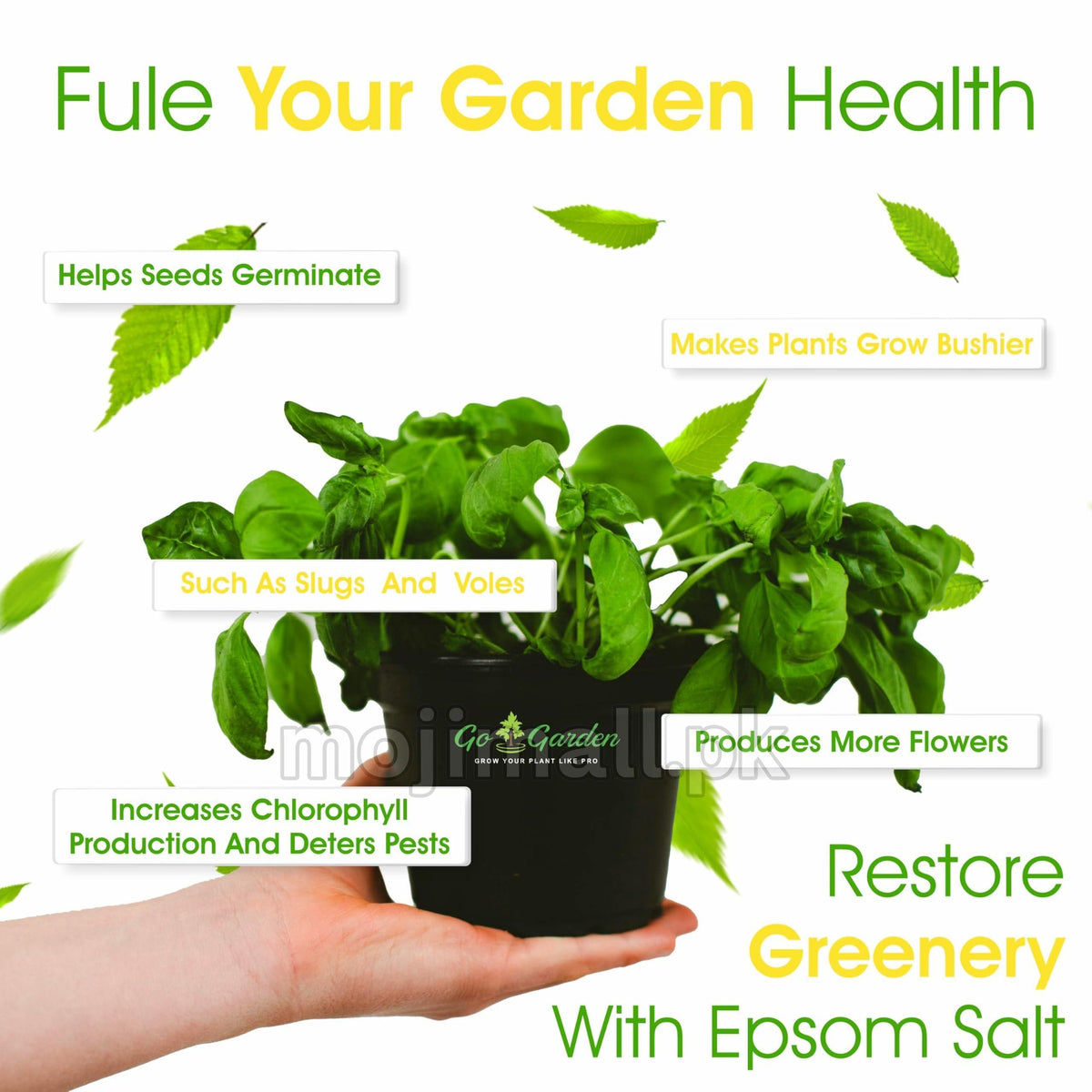
Epsom Salt (Magnesium Sulfate – ایپسم سالٹ) is a source of magnesium and sulfur for plants. It is commonly used when plants show signs of magnesium deficiency, such as yellowing between the leaf veins while the veins remain green.
Magnesium plays an important role in chlorophyll production, which helps plants maintain healthy green leaves. Epsom Salt can be used for potted plants, vegetables, herbs, flowers, lawns, and fruit plants when additional magnesium is needed. It is a plant supplement rather than a complete fertiliser, so it should be used alongside balanced plant nutrition and good soil care.
Pack Size Guide
-
400g: Suitable for a few pots, indoor plants, or first-time use
-
800g: Good for regular use in balcony pots, vegetables, herbs, and flowers
-
5kg: Better for many pots, lawns, fruit plants, or repeated garden use
Most home gardeners choose: 800g.
Benefits
-
Fix Magnesium deficiency: Useful when leaves show yellowing between green veins
-
Healthy growth: Helps maintain healthy leaf colour through chlorophyll formation
-
Water-soluble: Easy to mix in water for soil application or light foliar spray
-
Useful for all plants: Suitable for pots, garden beds, lawns, vegetables, herbs, flowers, and fruit plants
How to Use Epsom Salt
Soil Application
- Mix 1 teaspoon in 1 litre of water.
- Pour around the root zone, not directly on the stem.
- Use every 4–6 weeks only when magnesium deficiency is suspected.
- Avoid frequent use if the plant is already healthy and growing well.
Foliar Spray
- Mix 1/2 teaspoon in 1 litre of water.
- Spray lightly on leaves in the early morning or evening.
- Avoid spraying during hot sun, hot weather, or plant heat stress.
- Test on a small part of the plant first, especially for sensitive plants.
For Indoor Plants
- Mix 1/2 teaspoon in 2 litres of water .
- Apply once a month only if the plant shows deficiency signs.
- Avoid repeated use in small pots because salts can build up over time.
Best For
- Leaves turning yellow between green veins
- Plants that look pale despite normal fertilising
- Balcony pots, indoor plants, and container gardens
- Vegetables and herbs, e.g. chillies, tomatoes, and dhania
- Flowers, citrus, fruit plants, and lawns
FAQs
Should I apply Epsom Salt to soil or spray it on leaves?
Soil application is better for regular use. A light foliar spray can be used when deficiency signs appear on leaves, but avoid spraying in hot sunlight.
How often should I use Epsom Salt on plants?
Use it every 4–6 weeks only when needed. It should not be used weekly as a routine fertiliser.
Can I use Epsom Salt on vegetables and fruits?
Yes, use it when magnesium deficiency is suspected. Avoid spraying close to harvest, and wash edible leaves, fruits, and herbs thoroughly before use.
Why are my plant leaves still yellow after using Epsom Salt?
The yellowing may not be caused by magnesium deficiency. Check watering, drainage, root health, pests, nitrogen, and iron deficiency before applying more.