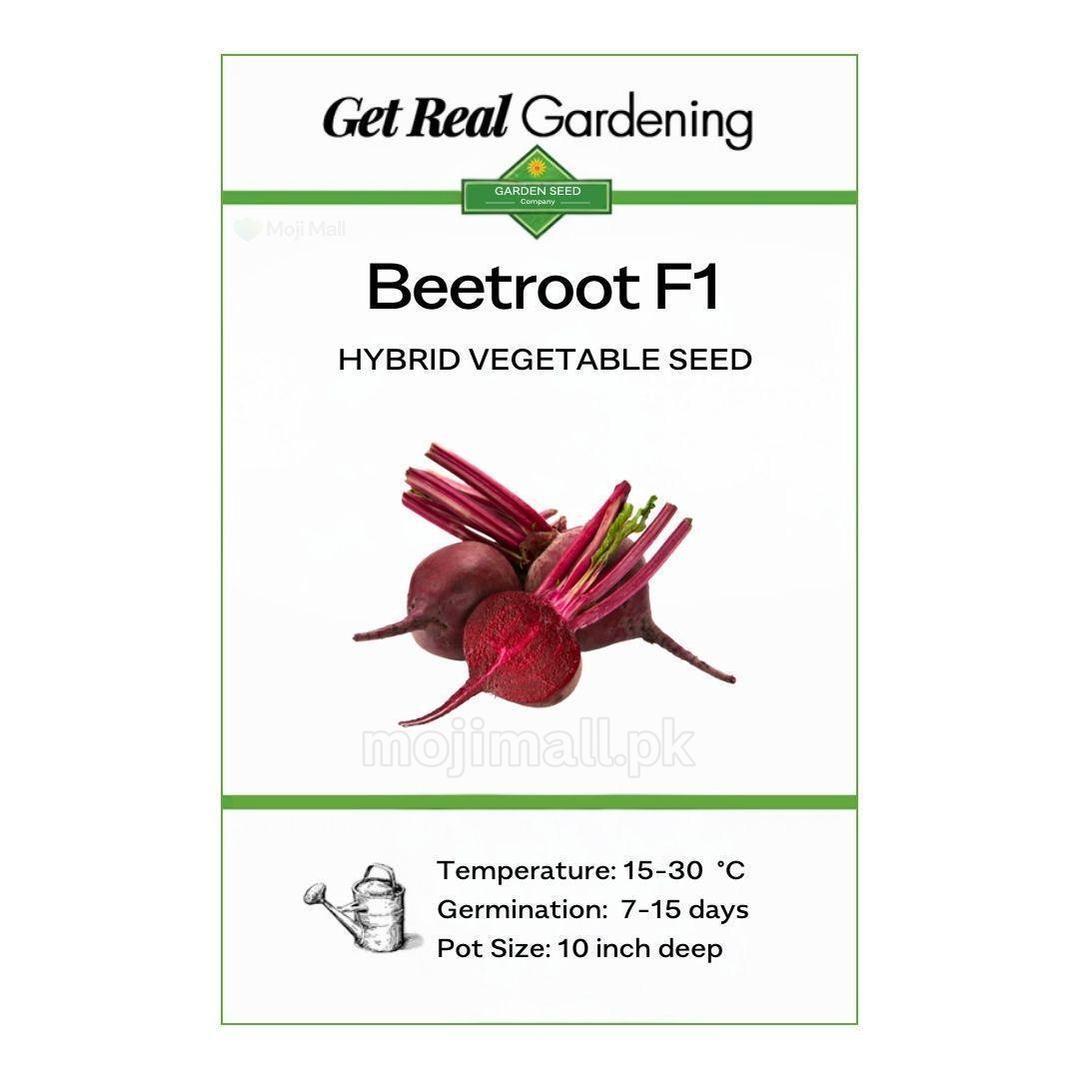
Beetroot F1 Hybrid is a cool-season vegetable that forms round, deep-red roots with a mildly sweet, earthy taste. The roots can be used in salads, raita, juices, soups, pickles and cooked dishes. Young leaves can also be cooked like spinach.
This hybrid grows well during Pakistan’s cooler months. The roots develop near the soil surface, while the green leaves often have attractive red or purple veins.
Why Grow It
-
Deep-Red Roots: Produces round roots with rich colour.
-
Mild Taste: The roots have a mildly sweet, earthy flavour.
-
Kitchen Uses: Suitable for salads, raita, juices, soups, pickles and cooked dishes.
-
Edible Leaves: Young leaves can also be cooked and eaten.
-
Pot Friendly: Grows well in deep pots, grow bags and garden beds.
Best Conditions
-
Germination: Usually 7–14 days
-
Temperature: Around 13–24°C
-
Sunlight: At least 6–8 hours
-
Pot size: A pot at least 10–12 inches deep
-
Spacing: About 3–4 inches between plants
-
Plant height: Usually around 12–18 inches
-
Soil: Loose, fertile and well-draining mix
In Lahore, Faisalabad, Islamabad and Rawalpindi, sow from September to November. Another small sowing can be made in February before warm weather returns. In hotter areas such as Karachi and southern Punjab, sow from October to December after the strongest heat has eased. In colder northern and hilly areas, sow from March to April, or from August to September for an autumn harvest.
How to Sow
- Fill the final pot, grow bag or garden bed with loose, moist potting mix.
- Sow the seeds directly about ½ inch deep and 1–2 inches apart.
- Cover lightly, water gently and keep the soil evenly moist.
- When the seedlings are 2–3 inches tall, remove the smaller ones.
- Leave the strongest plants about 3–4 inches apart.
Plant Care
Water regularly so the soil remains evenly moist but never waterlogged. Irregular watering can cause the roots to crack. Remove weeds carefully because disturbing the soil deeply may damage the developing roots.
Mix a small amount of Vermicompost into the soil before sowing. Avoid using too much nitrogen-rich fertilizer, as this may produce large leaves and small roots.
Check the leaves for aphids, flea beetles and leaf miners. Remove badly damaged leaves and spray Neem Oil on affected leaves, including their undersides.
Local Gardener Tips
- Sow a small batch every 2–3 weeks for harvesting over a longer period.
- Keep the soil loose and free from stones or hard lumps.
- Do not let the pot dry completely while the roots are swelling.
- Provide light afternoon shade if late-winter weather becomes unusually hot.
Harvesting
Beetroot is usually ready around 60–80 days after sowing, depending on the weather and growing conditions. Harvest when the visible top of the root is around 1½–3 inches wide.
Loosen the soil around the root and pull the plant gently by its leaves. Smaller roots are usually more tender, while roots left too long may become fibrous. Remove the leaves before storing the roots in the refrigerator. Pick only a few outer leaves if you want to use the greens without slowing root growth.
FAQs
Why are my plants producing leaves but no round roots?
The plants may be overcrowded, receiving too little sunlight or getting too much nitrogen-rich fertilizer. Thin them to the correct spacing and provide sufficient direct sunlight.
Why are the roots cracking?
Cracking usually happens when dry soil is followed by heavy watering. Keep the soil evenly moist throughout growth.
Why has the beetroot become hard or fibrous?
Hot weather, dry soil and delayed harvesting can make the roots fibrous. Harvest them while they are still young and tender.
Common names: Beetroot, Garden Beet, Red Beet, Chukandar, چقندر