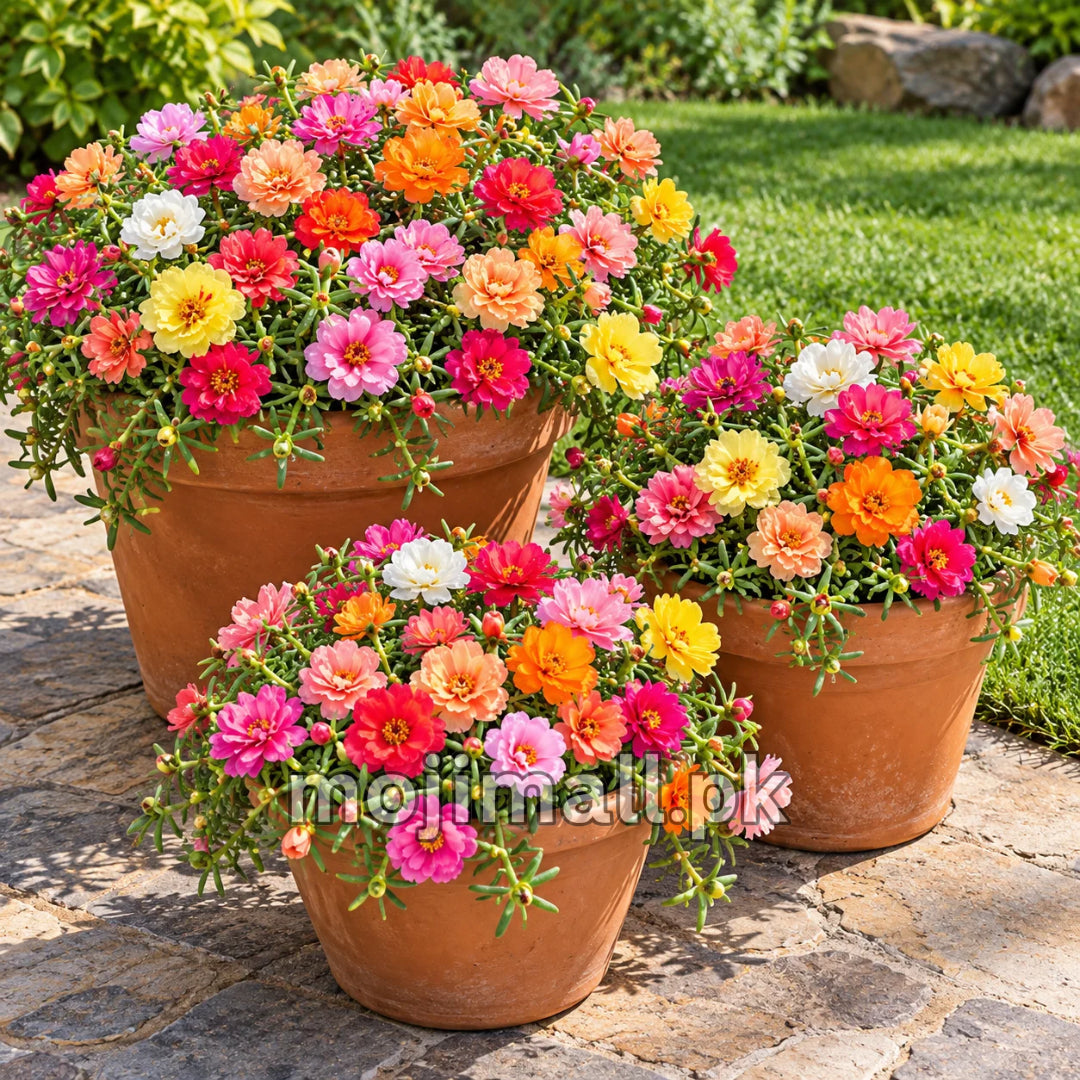
Portulaca Double Mixed, also known locally as Gul Dopahri (گل دوپہری) or 9 O’Clock Flower, is a low-growing summer flower with fleshy green leaves and colourful, rose-like double blooms. The mixture may produce pink, red, orange, yellow, white and other bright shades.
Native to South America, Portulaca grows well in Pakistan’s hot and sunny conditions. Its spreading growth suits pots, hanging baskets, sunny borders, rock gardens and open spaces at the front of flower beds.
Why Gardeners Love It
-
Double Blooms: Produces layered flowers resembling miniature roses.
-
Mixed Colours: A single packet can produce plants with several bright flower colours.
-
Heat Tolerant: Continues growing during hot and dry summer weather.
-
Low Growing: Spreads over the soil to create a colourful flowering cover.
-
Pot Friendly: Suitable for shallow pots, bowls and hanging baskets.
Best Conditions
-
Germination: Usually 7–14 days
-
Temperature: Around 20–35°C
-
Sunlight: At least 6–8 hours
-
Pot size: An 8–12-inch pot
-
Spacing: About 6–8 inches between plants
-
Plant height: Usually around 4–8 inches
-
Plant spread: Usually around 8–12 inches
-
Soil: Light, sandy and well-draining mix
-
First flowers: Usually around 8–10 weeks
Sowing note: In Lahore, Faisalabad, Islamabad and Rawalpindi, sow from February to April. In hotter areas such as Karachi and southern Punjab, sow from January to March, or again from late August to September after prolonged monsoon rain has eased. In colder northern and hilly areas, sow from March to May after the risk of frost has passed.
How to Sow
- Fill a seed tray or small pot with fine, moist seed starter mix.
- Mix the very small seeds with a little dry sand for easier distribution.
- Scatter the seeds thinly over the surface and press them gently.
- Do not bury them deeply. Cover only with a very fine dusting of the mix.
- Mist the surface and keep the tray warm with bright light.
- Transplant carefully when the seedlings have 2–3 pairs of true leaves.
Plant Care
Water when the upper layer of soil has dried. Established plants tolerate short dry periods, but their roots can rot in constantly wet soil. Use pots with open drainage holes and protect them from prolonged monsoon rain.
Portulaca flowers best without heavy feeding. Mix a small amount of Vermicompost into poor potting soil before planting. Avoid frequent NPK 20-20-20 applications because excessive nitrogen can produce more leaves and fewer flowers. If aphids, thrips, whiteflies or spider mites appear, spray Neem Oil on the affected growth according to its label instructions.
Local Gardener Tips
- Mix the tiny seeds with dry sand before sowing.
- Do not cover the seeds with a thick layer of soil.
- Give the plants maximum direct sunlight for stronger flowering.
- Use shallow, wide containers when growing several colours together.
- Keep pots away from places where rainwater collects.
- Trim long stems if the plants begin looking untidy.
Flowering
Portulaca usually begins flowering around 8–10 weeks after sowing. The double flowers open best in bright sunlight and may close during cloudy weather or by evening.
Remove dried flowers and weak stems to keep the plants tidy. Light trimming encourages fresh side growth and helps maintain a fuller shape during the flowering season.
FAQs
Does one Portulaca plant produce every colour?
No. Each plant generally produces one main flower colour. The packet contains seeds for different colours, so several plants should be grown together for a mixed display.
Why are the seedlings collapsing after germination?
This is commonly caused by damping-off in continuously wet soil. Improve airflow, reduce watering and make sure the seed tray drains freely.
Can Portulaca be propagated from cuttings?
Yes. Cut a healthy stem approximately 3–4 inches long, remove the lower leaves and place it in a sandy, well-draining mix. Water lightly until fresh growth appears.
Will Portulaca survive winter?
Portulaca is sensitive to frost and is generally grown as a summer annual. It may survive longer in warm, frost-free areas, but cold and continuously wet winter soil can kill the plant.
Common names: Portulaca Double Mixed, Moss Rose, Rose Moss, Sun Rose, 9 O’Clock Flower, Nine O’Clock Flower, Noon Flower, Gul Dopahri, گل دوپہری