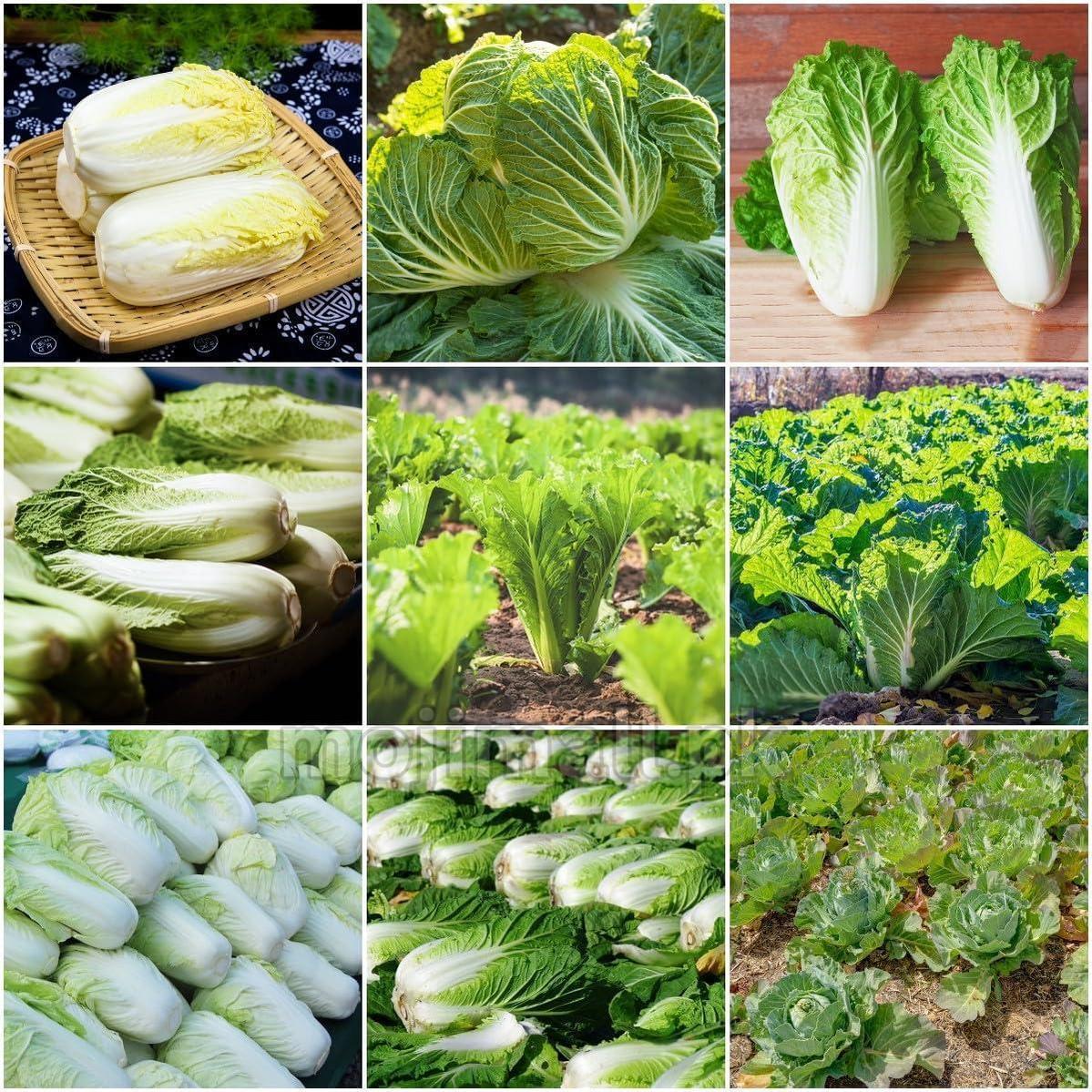
Chinese Cabbage, also called Napa Cabbage, forms a tall head of tightly packed pale green leaves with broad white ribs. It has a mild, slightly sweet cabbage taste and a crisp texture. Use it in stir-fries, soups, noodles, fried rice, dumpling fillings, salads, pickles, chicken and vegetable dishes.
Chinese Cabbage was developed in China and has been grown across East Asia for more than a thousand years. Unlike round cabbage, it produces a longer head with thinner, more tender leaves and wide, juicy ribs.
Why Grow It
-
Mild Flavour: Sweeter and less strong than many round cabbages.
-
Crisp Texture: Produces tender leaves with broad, crunchy ribs.
-
Full-Sized Heads: Each plant develops one tall, tightly packed head.
-
Many Uses: Suitable for fresh, cooked, pickled and fermented dishes.
-
Pot Friendly: One plant can be grown in a large container or grow bag.
Best Conditions
-
Germination: Usually 4–10 days
-
Temperature: Around 10–25°C
-
Sunlight: At least 6 hours
-
Pot size: A 12–14-inch pot for one plant
-
Spacing: About 12–18 inches between plants
-
Plant height: Usually around 12–18 inches
-
Soil: Moist, fertile and well-draining mix
In Lahore, Faisalabad, Islamabad and Rawalpindi, sow from September to November. In hotter areas such as Karachi and southern Punjab, sow from October to December once the weather becomes cooler. In colder northern and hilly areas, sow from August to September before severe frost, or from March to April after hard frost has passed.
How to Sow
- Fill a seed tray, small pot or garden bed with fine, moist potting mix.
- Sow the seeds around ¼–½ inch deep.
- Cover lightly, water gently and keep the mix lightly moist.
- Thin direct-sown seedlings or transplant tray-grown seedlings after they develop 3–4 true leaves.
- Leave 12–18 inches between the final plants.
Plant Care
Keep the soil evenly moist while the leaves and head are developing. Do not allow the soil to repeatedly become completely dry, and avoid leaving the roots in standing water.
Mix a small amount of Vermicompost into the soil before sowing or transplanting. Mix another small amount into the upper soil about 3–4 weeks later, without disturbing the roots.
Check between the leaves for aphids, flea beetles and cabbage caterpillars. Hand-pick visible caterpillars and remove badly damaged leaves. Spray Neem Oil on affected leaves, including their undersides.
Local Gardener Tips
- Grow only one plant in a 12–14-inch pot.
- Give the plants maximum sunlight during winter.
- Leave enough space for each head to develop fully.
- Check between the folded leaves for hidden caterpillars.
- Protect young seedlings from strong rain and rough watering.
Harvesting
Chinese Cabbage is usually ready within 60–80 days. Press the head gently before harvesting. A mature head should feel firm and dense rather than loose.
Cut the complete head near the soil with a clean knife. If you want a full-sized head, avoid regularly removing healthy outer leaves while the plant is developing. When cooking, the thick white ribs can be added first because they take slightly longer to soften than the leafy parts.
FAQs
Is Chinese Cabbage the same as Bok Choy?
No. Chinese Cabbage forms a tall, tightly packed head. Bok Choy remains as an open group of dark green leaves with thick white or pale green stems.
Why is my Chinese Cabbage not forming a head?
Crowding, warm weather, weak sunlight or irregular watering can prevent a firm head from developing. Give each plant enough space and maintain steady moisture.
Why are the inner leaf edges turning brown?
This is often tipburn, caused when uneven soil moisture prevents enough calcium from reaching the fast-growing inner leaves. Water consistently and avoid excessive feeding.
Can I pick leaves before the head forms?
You can remove damaged outer leaves, but frequent picking may reduce the final head size. Grow extra plants separately if you want to harvest loose young leaves.
Common names: Chinese Cabbage, Napa Cabbage, Nappa Cabbage, Peking Cabbage, Celery Cabbage, Wombok, Kimchi Cabbage